Biogas & Landfill Flare Compliance: API 521 and Regional Rules
Biogas & Landfill Flare Compliance: API 521 and Regional Rules
A biogas or landfill gas flare project is judged on two separate questions. The first is physical: does the combustion system actually destroy methane and trace VOC compounds across the flow range the site really produces? The second is documentary: can the design be shown to meet the standard the project is engineered against, most commonly API 521 for pressure-relieving and depressuring systems? Buyers often compress both questions into a single procurement line item, an “API 521 certified flare,” and that shortcut is where evaluation begins to drift.
This guide explains how to read certification, standard, and regional requirement expectations for flare and thermal treatment projects in green energy and new materials. It maps compliance questions to the equipment categories that answer them: biogas flares, enclosed ground flares, elevated flares, flare tips, thermal oxidizers, and incineration systems. Technical values quoted below come from published standards or manufacturer-documented specifications, and where a target cannot be verified it is stated as a design question rather than as a number.
Why Compliance Is Hard to Read in Biogas and Landfill Gas Projects
Three different classes of requirement normally sit behind the word “compliance,” and each is satisfied by a different document.
- Design standard compliance. The flare system is engineered to a recognized relief and depressuring standard, and the evidence is a design package: relief load calculations, header sizing, flare height, radiation assessment, and drainage details.
- Manufacturer certification. The fabricator holds third-party assessed management system certificates with a defined scope, issuing authority, and validity period.
- Regional permitting. The operating site holds a permit that defines emission limits, monitoring, and reporting obligations under local rules.
API Standard 521, Pressure-Relieving and Depressuring Systems, published by the American Petroleum Institute, is the design standard most often referenced for flare systems. It covers system-level engineering requirements, including a minimum flare header slope of 1/4 inch per 10 feet for drainage, alongside relief load determination, header sizing, and depressuring philosophy. What a project receives against this standard is a documented design — calculations, drawings, specifications, and test records — not a badge attached to a piece of equipment.
Management system certification covers only the second class. Quality, environmental, and occupational health and safety certificates describe how a manufacturer controls fabrication, inspection, and the environmental performance of its own operations. They support supplier qualification. They do not certify combustion efficiency, and presenting them as emissions proof is a common and expensive misunderstanding during tender evaluation.
Practical rule: place every compliance claim into one of the three boxes. Ask for API 521 design documentation, for management system certificates with scope and validity stated, and for performance commitments expressed in measurable terms. A claim that fits none of the three boxes is unverified.
Biogas and landfill gas add a further complication. The gas is produced by biological decomposition rather than by a controlled process unit, so composition and flow vary with waste intake, collection system condition, and operating practice. The design basis therefore becomes part of the compliance conversation: turndown capability, control philosophy, and burner configuration carry as much weight as the headline destruction figure.
Industry Background: Why Flare and Thermal Treatment Expectations Keep Tightening
Flaring is a measurable emissions problem, and the published figures show that it is not shrinking quickly. Global gas flaring volumes reached 151 billion cubic meters (bcm) in 2024, the highest level since 2007, according to World Bank global flaring data. That single figure explains why methane destruction performance has moved from an engineering detail to a project-level acceptance criterion.
Market data points in the same direction:
- The global flare systems market is valued at approximately USD 4.8 billion in 2025, driven by regulatory pressure on hydrocarbon emissions and recovery in oil and gas investments (Dataintelo).
- The global Totally Enclosed Ground Flares (TEGF) segment was valued at USD 113 million in 2024, with growth driven by efficiencies exceeding 98% in destroying harmful emissions (Intel Market Research). Enclosed configurations are increasingly chosen where destruction performance and neighbourhood impact must both be managed.
- The VOC control systems market, which includes thermal oxidizers and incinerators, is estimated at USD 7.5 billion in 2025, with China identified as a key growth market at a 5.4% CAGR (Fact.MR).
- Asia-Pacific holds a 35% share of the flare gas recovery system market as of 2025, the largest regional share globally (Grand View Research).
Read together, these figures describe a compliance environment in which methane destruction, VOC destruction, and site-level impact are evaluated as one package. Suppliers able to document all three — combustion performance, thermal treatment performance, and quality system discipline — are easier to qualify than suppliers that can only assert one of them.
Matching Compliance Questions to Equipment Categories
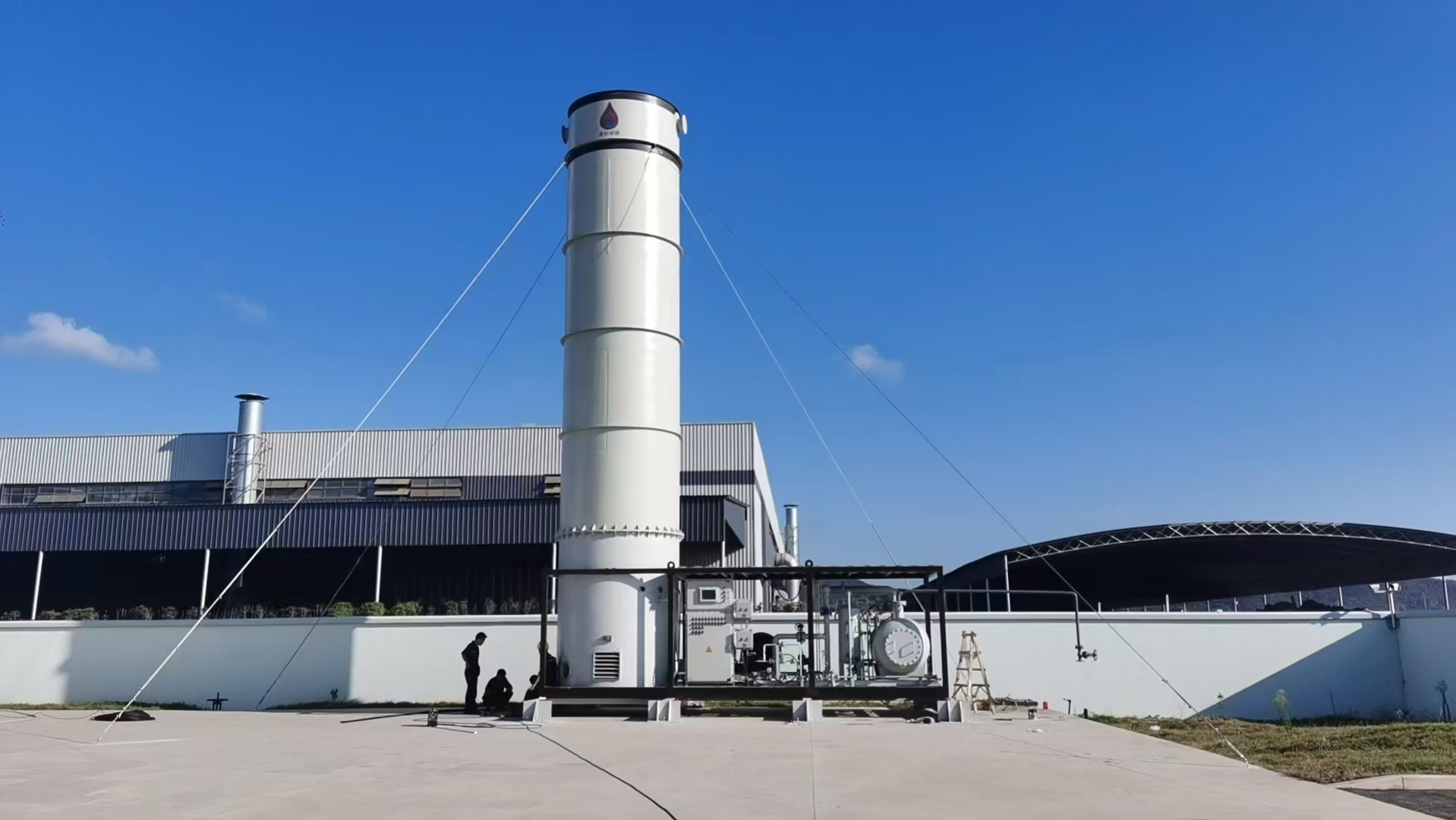
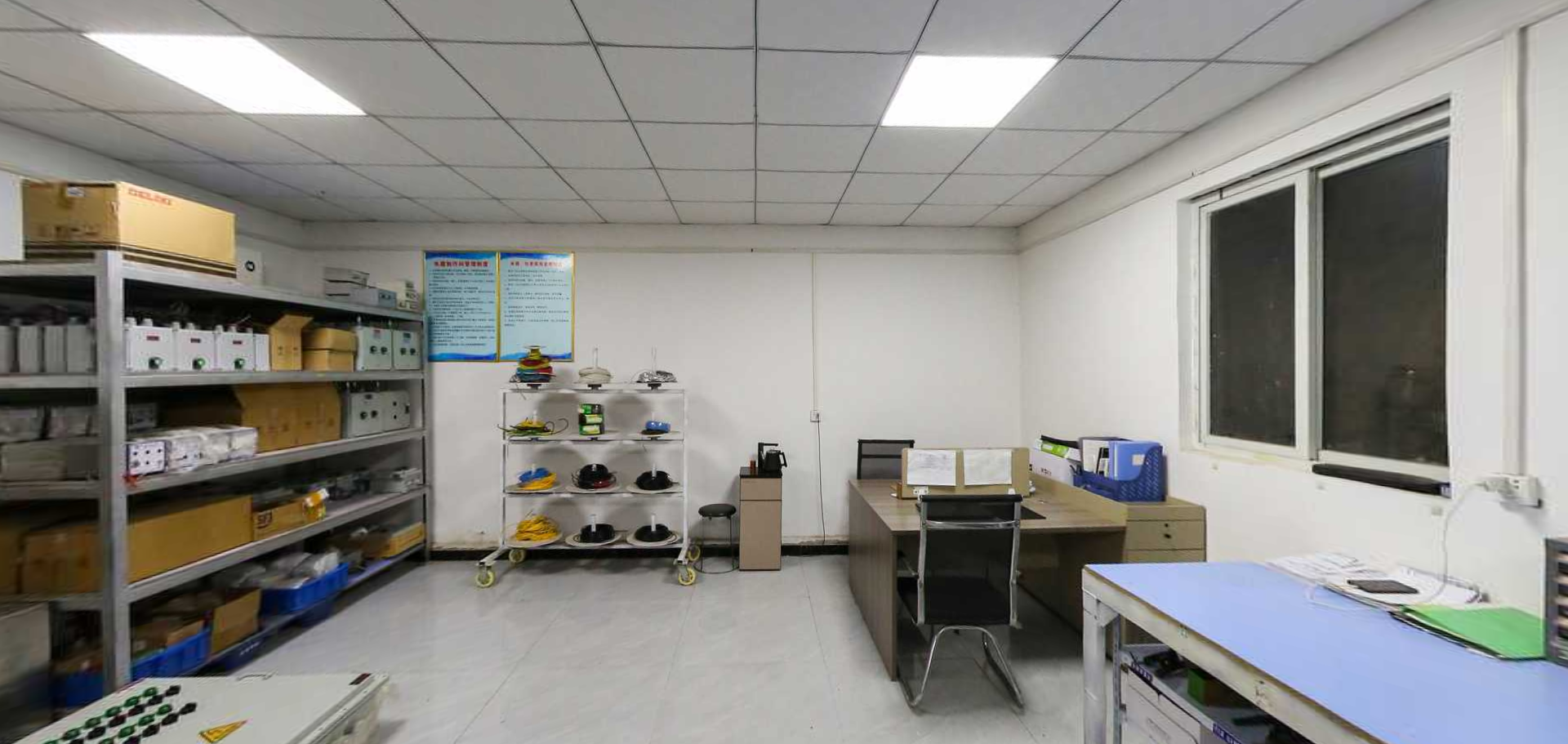
Shandong Zexuan Environmental Protection Technology Co., Ltd. (Zexuan) is a manufacturer and engineering service provider of industrial flare systems and thermal treatment equipment, established in 2015. The company operates a 24,100 m² manufacturing base with more than 80 employees, including 30+ engineering and technical specialists, and supplies elevated flare systems, enclosed ground flares, skid-mounted and mobile LNG/LPG flares, flare tips, thermal oxidizers, and industrial incineration systems.
Its product structure is a useful way to show how compliance questions map onto equipment categories in biogas and landfill gas projects.
1. Methane destruction at the point of combustion
The primary compliance question in a landfill gas or biogas project is how completely methane is oxidised. The ZX-EGF Series enclosed ground flare is designed for this duty, with combustion efficiency up to 99.9%, an operating temperature range of 800°C–1200°C, low radiation and low noise design, and multiple burner configurations. It is intended for LNG terminals, chemical plants, petrochemical parks, hazardous gas treatment, pharmaceutical industry, and industrial park applications, and uses carbon steel, SS304, SS316L, SS310S, and refractory lining materials.
2. Elevated configurations for larger relief loads
Elevated flare systems cover self-supported, guyed-wire, derrick-supported, and demountable configurations (ZX-SSEF, ZX-GWF, and ZX-DSF series, with models customized according to project requirements). Typical parameters include flare height from 10 m to 150 m+, operating temperature up to 1100°C, turndown ratio up to 100:1, and combustion efficiency of typically ≥98%–99.9% depending on design conditions. The turndown figure is the parameter that most directly affects compliance in biogas service, because it determines whether the flare remains stable when gas production falls well below the design maximum. Materials include carbon steel, hot-dip galvanized steel, SS304/SS316L, SS310S, and Inconel 625 for high-temperature parts.
3. Flare tips determine smoke, stability, and assist requirements
The ZX-FT Series flare tip is configured for sonic, smokeless, air-assisted, or Coanda operation, with diameter and gas capacity customized to the flow rate and gas properties. Operating temperature reaches up to 1100°C for hydrocarbon gases, and the primary materials are SS316L, SS310S, and Inconel 625. On projects where visible smoke or flame stability is a permit condition, tip selection is the determining design decision rather than stack height alone.
4. Thermal oxidation for VOCs and trace compounds
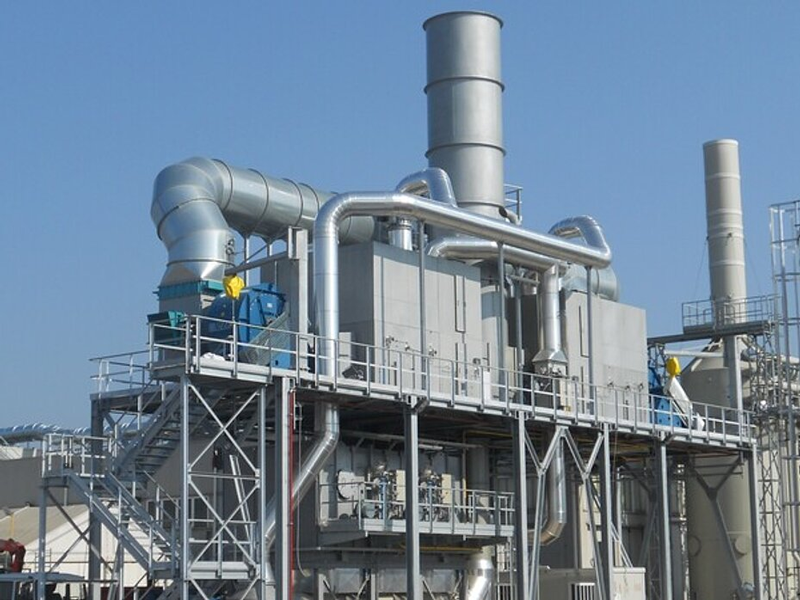
Methane is not the only regulated compound in landfill and biogas streams. The ZX-TO, ZX-RTO, and ZX-RCO series thermal oxidizers are designed for VOC treatment with operating temperatures of 800°C–1200°C and VOC destruction efficiency up to 99% or higher, in direct thermal oxidation, regenerative thermal oxidation, and regenerative catalytic oxidation configurations. They use carbon steel, SS304, SS316L, and ceramic heat storage materials, support continuous operation, and offer heat recovery options. RTO systems are commonly applied in chemical plants, pharmaceutical plants, waste gas treatment, and VOC control projects.
5. Incineration where the waste stream is not purely gaseous
The ZX-INC Series hazardous waste incineration system is classified as a rotary kiln incinerator for solid, liquid, and hazardous waste. It operates at 850°C–1200°C with multi-stage combustion, heat recovery, and waste gas treatment integration, using carbon steel, SS310S, refractory materials, and high-temperature alloys. For biogas and new materials projects, this category applies when condensates, sludges, or contaminated liquid streams accompany the gas treatment scope.
6. What the certificates actually cover
Process discipline during fabrication is documented separately from combustion performance. Zexuan holds three management system certificates issued by CSU International Certification Co., Ltd. and valid from 2026-03-18 to 2029-03-17:
- Quality management system — GB/T 19001-2016 / ISO 9001:2015, certificate number 26326Q00079R001.
- Environmental management system — GB/T 24001-2016 / ISO 14001:2015, certificate number 26326E00054R001.
- Occupational health and safety management system — GB/T 45001-2020 / ISO 45001:2018, certificate number 26326S00054R001.
The certified scope covers development of waste gas treatment equipment and control units, together with sales of waste gas and waste liquid treatment equipment. The certificates carry the CNAS accreditation mark for the domestic China market and the IAF multilateral recognition mark for international markets. Their correct use in a tender is to qualify the manufacturing process, not to substitute for a performance guarantee.
Step-by-Step: Interpreting Compliance Expectations Before You Order
- Separate the three layers. List design standard requirements, manufacturer certification requirements, and permit conditions as three distinct lists with three distinct document owners.
- Fix the design basis. Record normal, maximum, and emergency flow, together with gas composition and variability. In landfill and biogas service this defines the required turndown. Elevated flare systems are available with turndown ratios up to 100:1, and enclosed ground flares with combustion efficiency up to 99.9%.
- Convert regional rules into measurable targets. Local rules differ by jurisdiction, but they typically resolve into destruction efficiency, visible smoke, radiation, and noise criteria. Request a performance statement against each criterion rather than a general statement of compliance.
- Select configuration against site conditions. Enclosed ground flares suit limited-space sites with low radiation and low noise requirements; elevated flares are used where dispersion governs, with heights from 10 m to 150 m+; skid-mounted and mobile units serve remote, temporary, or staged installations.
- Define the documentation and inspection set. Zexuan’s inspection scope includes incoming material inspection, welding inspection, dimensional inspection, pressure/leak testing where applicable, functional testing, Factory Acceptance Test (FAT), and final inspection before shipment, with acceptance defined as FAT plus Site Acceptance Test (SAT).
- Check certificate scope against your equipment category. Verify that the quality, environmental, and occupational health and safety certificates cover waste gas treatment equipment and control units, and confirm the validity period.
- Confirm execution terms. Minimum order quantity is 1 set, with EXW/FOB/CIF delivery terms and T/T or L/C payment, typically 30% advance payment and 70% before shipment. Production lead time is typically 60–120 days depending on project requirements, with monthly capacity of 5 sets for customized industrial systems.
Use Cases: How These Questions Play Out in Practice
- Coalbed methane vent gas, China. One ground flare system with 90×10⁴ Nm³/d processing capacity, a three-stage venting design, and PLC automatic control has been operating for more than two years, delivering stable methane combustion and improved gas management safety.
- Oilfield transfer station, China. An enclosed ground flare with explosion-proof control cabinet and automatic ignition was completed within one year, achieving safe disposal of natural gas vent gas with reduced noise and visual impact.
- Natural gas gathering and transportation, China. Two guyed-wire elevated flare systems with a 60 m structure and DN350 flare tip, using automatic ignition and PLC control, operate stably under harsh climate conditions.
- Waste tire recycling, Turkey. A skid-mounted ground flare system has been operating for more than two years, using a compact modular structure and a customized flare solution to support stable operation and improved process safety.
- Waste tire pyrolysis, Iraq. A skid-mounted ground flare system has been in operation for more than three years, controlling uncontrolled gas emissions and ensuring safe combustion during plant operation.
- Plastic pyrolysis, Vietnam. A skid-mounted ground flare system with modular skid design and flexible installation was configured for variable gas conditions in a pyrolysis gas application.
- Tire pyrolysis flue gas, Korea. Three sets of flue gas treatment equipment were applied to exhaust gas purification in a tire pyrolysis process, integrated with the environmental treatment system.
- Fine chemical process vent gas, China. Two flare systems were supplied for safe combustion of process vent gas from DL-Methionine production, designed for complex chemical process gas and operating reliably for more than one year.
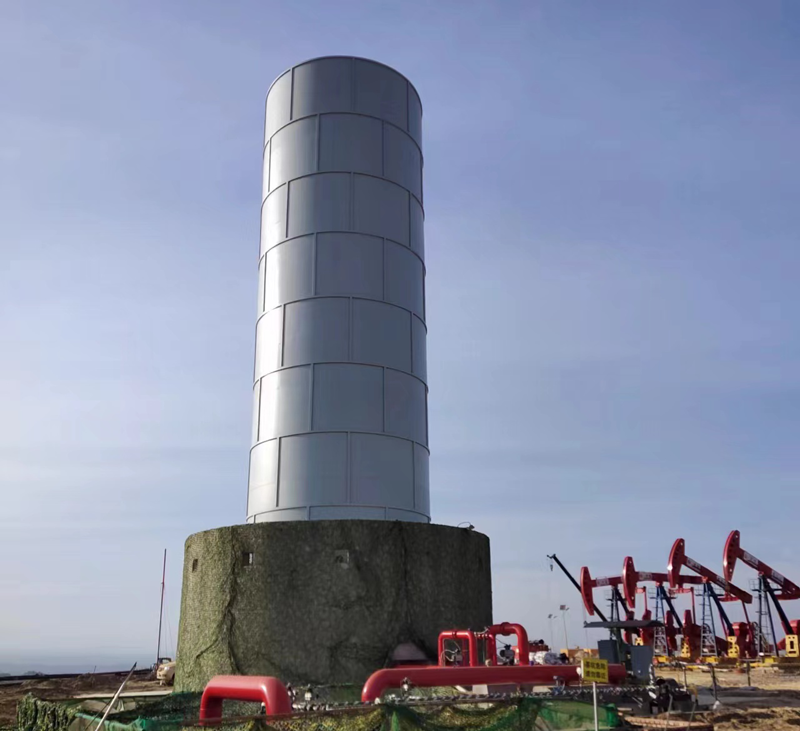
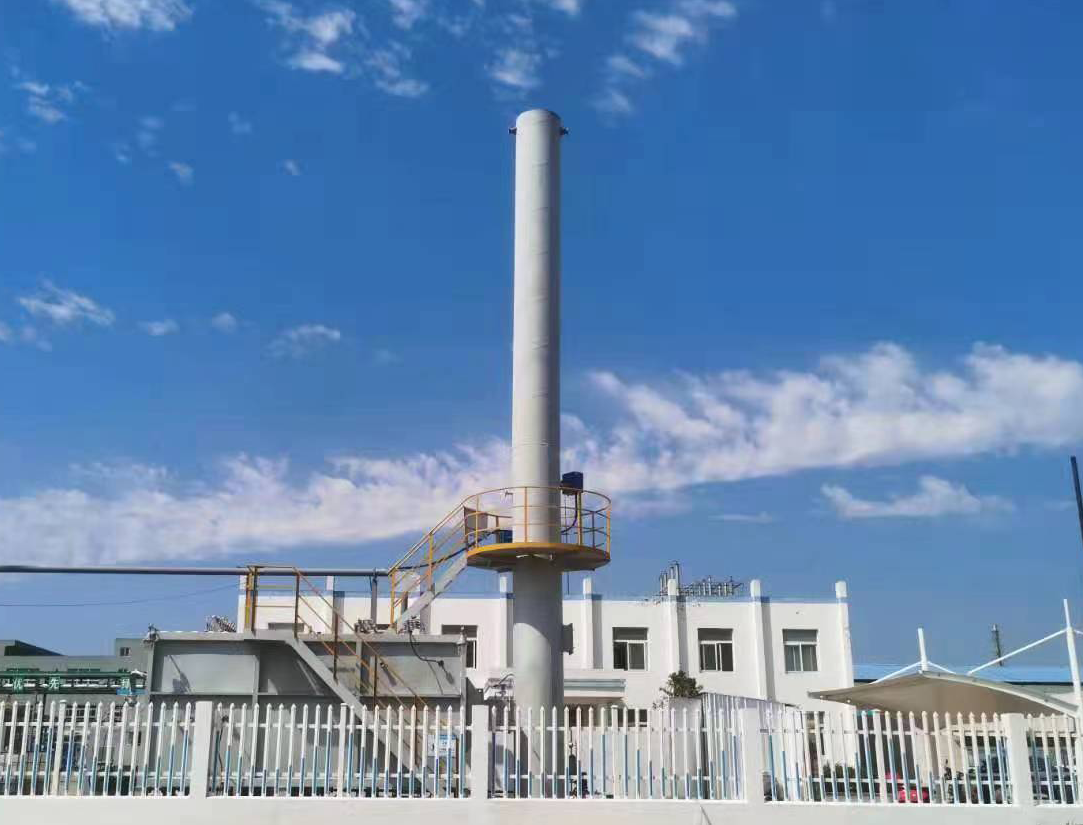
None of these projects should be read as a regulatory approval for any other site. Their value in a compliance discussion is narrower and more useful: each one shows that a specific configuration, control philosophy, or inspection step has been executed in a real gas stream whose composition varies over time.
Comparison Table: Equipment Categories and Their Compliance Role
| Equipment category | Series | Typical operating temperature | Documented performance | Compliance-relevant role | Key materials |
|---|---|---|---|---|---|
| Enclosed ground flare (EGF) | ZX-EGF | 800°C–1200°C | Combustion efficiency up to 99.9% | Methane destruction at limited-space sites; low radiation and low noise | Carbon steel, SS304, SS316L, SS310S, refractory lining |
| Elevated flare system | ZX-SSEF / ZX-GWF / ZX-DSF | Up to 1100°C | Combustion efficiency typically ≥98%–99.9%; turndown up to 100:1 | Emergency relief and depressuring service; dispersion via stack heights of 10 m–150 m+ | Carbon steel, hot-dip galvanized steel, SS304/SS316L, SS310S, Inconel 625 |
| Flare tip | ZX-FT | Up to 1100°C | Sonic, smokeless, air-assisted, and Coanda configurations; customized diameter and gas capacity | Smoke control and flame stability where these are permit conditions | SS316L, SS310S, Inconel 625 |
| Thermal oxidizer | ZX-TO / ZX-RTO / ZX-RCO | 800°C–1200°C | VOC destruction efficiency up to 99%+; continuous operation; heat recovery options | VOC and trace compound destruction; chemical, pharmaceutical, and coating applications | Carbon steel, SS304, SS316L, ceramic heat storage media |
| Hazardous waste incineration | ZX-INC | 850°C–1200°C | Multi-stage combustion with waste gas treatment integration | Liquid, solid, and hazardous waste streams accompanying gas treatment scope | Carbon steel, SS310S, refractory materials, high-temperature alloys |
The table is best used as a screening tool during tender preparation. It shows which equipment category carries which performance commitment, and therefore which document a supplier should be asked to produce for each line of the specification.
FAQ: Biogas and Landfill Flare Compliance
Is API 521 a certification, and how is compliance demonstrated for a biogas flare?
API 521 is a design standard for pressure-relieving and depressuring systems published by the American Petroleum Institute; it is not a certificate issued to equipment. It defines system-level requirements such as a minimum flare header slope of 1/4 inch per 10 feet for drainage. In practice, compliance is demonstrated through the design package — relief load basis, header and stack sizing, radiation and drainage details — supported by project verification steps such as Factory Acceptance Test (FAT) and Site Acceptance Test (SAT). Zexuan supplies flare systems on an API 521 compliant design basis and issues the corresponding design documentation.
Can a biogas or landfill gas flare be supplied as an OEM system under our own brand?
Yes. Zexuan operates as a manufacturer, OEM, ODM, and engineering solution provider for customized industrial systems. Customization covers flare type, capacity, material, structure, control system, layout, voltage, and documentation. Minimum order quantity is 1 set, and typical production lead time is 60–120 days depending on project requirements.
What drives the commercial profile of a biogas flare or thermal oxidizer project?
The commercial profile is driven primarily by customization scope rather than by a catalogue size: flare type and configuration, gas capacity, material selection (from carbon steel through SS304, SS316L, and SS310S to Inconel 625 for high-temperature parts), structural design, control system, and documentation requirements. Commercial terms are EXW, FOB, or CIF, with T/T or L/C payment and typical terms of 30% advance payment and 70% before shipment, negotiable according to project requirements.
How is the equipment validated before shipment?
Inspection follows a defined sequence: incoming material inspection, welding inspection, dimensional inspection, pressure/leak testing where applicable, functional testing, Factory Acceptance Test (FAT), and final inspection before shipment. Acceptance criteria are FAT plus Site Acceptance Test (SAT) at the project site. For biogas and landfill gas projects, this is the stage at which the documented design basis is checked against the equipment actually built.
What lead time and capacity should be planned into a compliance-driven schedule?
Minimum order quantity is 1 set, monthly production capacity is 5 sets for customized industrial systems, and annual manufacturing capacity exceeds 60 sets of flare and thermal treatment systems. Production lead time is typically 60–120 days depending on project requirements, which means permit and design approval milestones should be sequenced ahead of that window rather than run in parallel with it. To review the equipment categories and certification documentation in more detail, the Zexuan catalogue can be downloaded from the link at the end of this article, and project-specific questions can be sent to alice@zexuaneco.com.
Conclusion
Compliance in biogas and landfill flare projects is not a single certificate and not a single number. It is a chain of three links: a design that meets API 521 requirements and is documented as such, a manufacturer whose quality, environmental, and occupational health and safety systems are certified with a defined scope and validity period, and a site that holds the permit defining emission limits, monitoring, and reporting duties.
For buyers at the evaluation and execution stage, four checks carry most of the weight:
- Confirm the design basis and required turndown for a variable biogas stream before choosing between enclosed ground flares (combustion efficiency up to 99.9%) and elevated configurations (turndown up to 100:1).
- Confirm which performance figure belongs to which equipment category — methane combustion at the flare, VOC destruction up to 99%+ at the thermal oxidizer, and 850°C–1200°C multi-stage combustion where waste streams are involved.
- Confirm the certificate scope, issuing authority, and validity period, and read them as process evidence rather than performance proof.
- Confirm execution terms — MOQ 1 set, 60–120 day lead time, FAT plus SAT acceptance — early enough that they do not become schedule risks.
Handled in that order, a compliance review stops being a documentation exercise and becomes an engineering decision the project team can defend.
Next step: request the design documentation pack, the management system certificates, or a configuration proposal for your biogas, landfill gas, or thermal treatment project.
Email: alice@zexuaneco.com | Tel / WhatsApp: +86 186 7883 1572 | Website: www.zexuaneco.com
Headquarters: No. 2000, Shunhua Road, Innovation Zone, Jinan, Shandong Province, China. Manufacturing Base: Huji Industrial Park, Mudan District, Heze, Shandong Province, China.
Catalogue and brochure download: Shandong Zexuan company and product brochure (PDF)
Have Questions or Need More Details?
Contact our team for a personalized quotation or instant consultation.
Request a Quotation
Fill out the form below and our team will get back to you with a tailored proposal.
WhatsApp Direct Chat
Prefer to chat in real-time? Message us on WhatsApp for instant assistance & quick answers.
- Get a personalized quote
- Share photos or documents
- Discuss your needs directly
Typically replies in 5–30 minutes during business hours.