Biogas and Landfill Gas Flare Application Guide: Methane Combustion for Waste-to-Energy
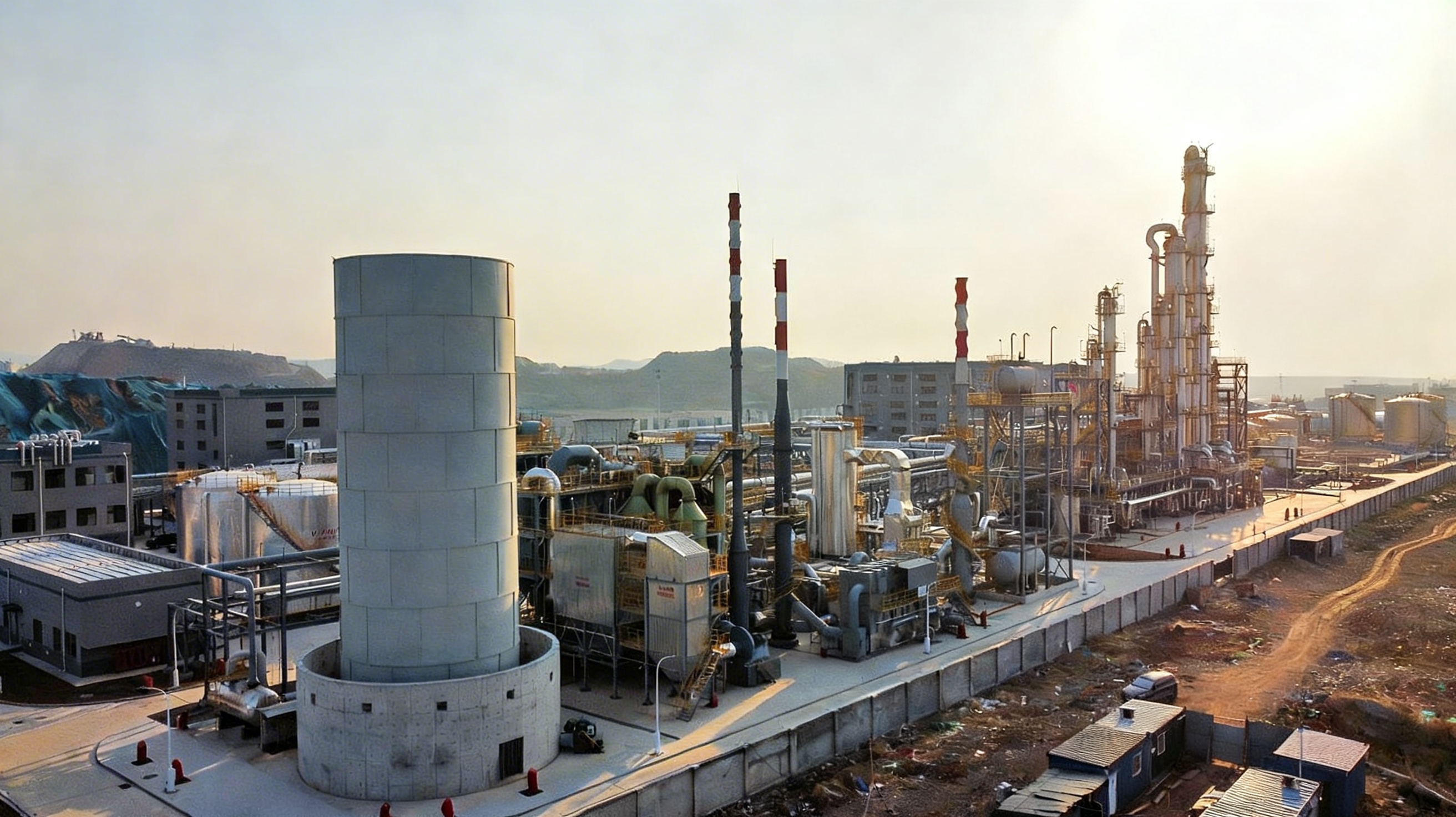
Cover: enclosed ground flare configuration used for controlled methane combustion in biogas, landfill gas and digester gas applications — Shandong Zexuan.
Landfill gas and digester biogas reach the flare continuously, at low pressure, and at a flow rate that changes as a site fills, ages and settles. Those three conditions — continuous generation, low pressure and variable flow — are what separate a biogas flare project from a refinery relief flare project, and they explain why a waste-to-energy operator cannot simply order a standard flare stack and connect it to a gas collection header.
This application guide explains how biogas flare systems, landfill gas flares and enclosed ground flare configurations are specified for methane combustion in waste-to-energy projects. The reference design throughout is the ZXE-BGF Series biogas flare and landfill gas flare platform from Shandong Zexuan Environmental Protection Technology Co., Ltd., a manufacturer and engineering service provider established in 2015 and headquartered at No. 2000, Shunhua Road, Innovation Zone, Jinan, Shandong, China.
By the end of this guide you should be able to answer three execution-level questions: whether an open elevated flare or an enclosed ground flare fits your site; which materials survive your gas composition; and which tests, acceptance criteria and commercial terms should be written into the order before manufacturing starts.
Problem Definition: Why Landfill Gas and Biogas Need a Purpose-Built Flare
Direct venting versus controlled combustion. The defining decision in any landfill gas or biogas project is whether methane leaves the site as an uncontrolled release or as a controlled combustion product. In Zexuan's engineering comparison data, controlled combustion is described as replacing uncontrolled gas release with the dual core advantages of safety and environmental protection, with destruction efficiency typically ≥98% depending on system design and a significant reduction of combustible gas emissions. The same source notes that combustible gas converted through a flare becomes controlled combustion products, and that this can support heat recovery applications where the project includes heat utilisation.
Low pressure and variable flow. Biogas and landfill gas arrive at the flare header close to atmospheric pressure, and the flow rate tracks gas collection tuning, waste age, moisture and site conditions. Zexuan's tailored-design comparison lists gas flow, gas composition, pressure, temperature and site conditions as the inputs that drive customised design, and identifies complex hazardous gas and variable operating conditions as the primary fits for project-tailored equipment rather than standardized flare equipment with fixed universal specifications. On a landfill or digester site, variable flow is the normal operating case, not an exception.
Gas composition and corrosion. Corrosion caused by acidic gas, moisture or harsh environments is a recognised risk category in flare projects. The control method is corrosion-resistant material selection based on gas composition, combined with welding quality inspection and surface treatment and coating protection. This is the point at which material options stop being a cost item and become a service-life decision.
Emission, smoke, noise and thermal radiation control. A second recognised risk category covers smoke, noise, thermal radiation and pollutant emissions. The corresponding control method is emission control design, which in Zexuan's execution model includes combustion optimisation, smoke suppression design, thermal radiation calculation, noise control measures and flue gas treatment integration. For sites inside or near industrial parks, this is usually the difference between an accepted permit application and a rejected one.
Compliance expectations. Biogas and landfill gas flare projects are not exempt from pressure-relief design rules. Zexuan lists API 521 compliant design as a special requirement for both elevated flare system and enclosed ground flare system projects, together with the use of corrosion-resistant materials, high reliability, smokeless combustion and low thermal radiation.
Industry Background: Methane, Regulation and Market Direction
Global flaring remains a large-scale emissions problem rather than a niche one. According to World Bank global flaring data, flaring volumes reached 151 billion cubic meters in 2024, the highest level since 2007 — a figure that underlines why efficient relief and combustion systems continue to attract regulatory attention. Landfill gas and digester gas sit in the same policy conversation, because the methane that is not captured and combusted is released directly.
Commercially, the flare segment is stable and technology-driven. Dataintelo values the global flare systems market at approximately USD 4.8 billion in 2025, with demand shaped by regulatory pressure on hydrocarbon emissions and recovery in oil and gas investment. Intel Market Research puts the global Totally Enclosed Ground Flares (TEGF) segment at USD 113 million in 2024, with growth driven by destruction efficiencies exceeding 98% for harmful emissions. Grand View Research reports that Asia-Pacific holds a 35% share of the flare gas recovery system market as of 2025, the largest regional share globally — which is one reason buyers increasingly evaluate Asian manufacturers alongside established international names such as Zeeco, John Zink Hamworthy (Koch), Honeywell UOP and Baker Hughes.
Design governance is equally well defined. Flare system design is primarily governed by API Standard 521 (Pressure-Relieving and Depressuring Systems), which specifies a minimum flare header slope of 1/4 inch per 10 feet for drainage. Where a waste-to-energy site also has VOC or odour-control streams, the adjacent market matters as well: Fact.MR estimates the VOC control systems market, including thermal oxidizers and incinerators, at USD 7.5 billion in 2025, with China identified as a key growth market at a 5.4% CAGR.
Detailed Solution: How the ZXE-BGF Series Handles Biogas and Landfill Gas
Open Elevated or Enclosed Ground: Choosing the Biogas Flare Configuration
Two configuration families cover most biogas and landfill gas duty. On the elevated side, Zexuan builds self-supported flares, guyed-wire flares, derrick-supported flares and demountable flares — the last of which matters where site access or crane capacity is limited during installation. On the ground side, the ZX-EGF Series enclosed ground flare is a low-radiation design with refractory lining, material options including carbon steel, SS304, SS316L and SS310S, an operating range of 800°C–1200°C and combustion efficiency up to 99.9%. Zexuan positions the ZX-EGF Series for LNG terminals, chemical plants and petrochemical parks.
Configuration also changes the site experience. Enclosed ground flare systems are designed with low radiation and low noise, and are described as suitable for limited-space areas operating with low noise. That is the configuration to evaluate when the flare sits inside an industrial park, near a residential boundary, or on a plot where a tall stack would not pass the environmental review.
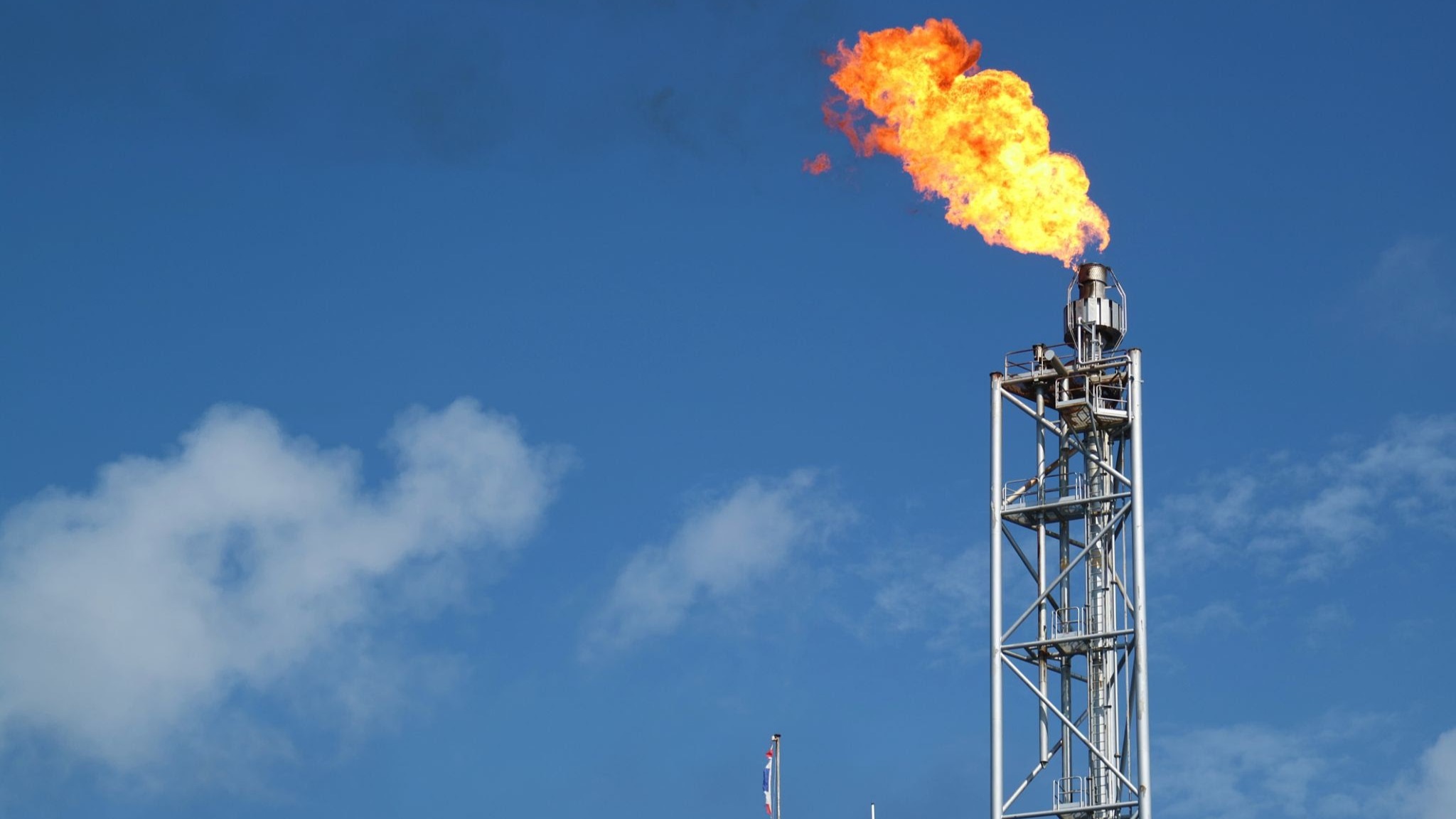
Elevated flare configuration — used where dispersion, plot space or project specification favours a stack over a ground-level enclosure.
Where smokeless operation is required, the combustion end of the system is defined by the flare tip rather than by the stack. The ZX-FT Series flare tip is designed for smokeless, sonic, air assisted and Coanda operation, with primary materials including Inconel 625, SS310S and SS316L, an operating temperature up to 1100°C, and customizable diameter and gas capacity for hydrocarbon gases in refinery, petrochemical, LNG and oil & gas processing industries.
Material Selection Against Corrosive Biogas and Landfill Gas
For biogas service, material selection is not a catalogue preference — it is a response to gas composition. Zexuan's corrosion control method is material selection based on gas composition, the use of stainless steel and high-temperature alloys when required, welding quality inspection, and surface treatment and coating protection. In the enclosed ground flare range, the documented options are carbon steel, SS304, SS316L and SS310S with refractory lining; in the flare tip range, Inconel 625, SS310S and SS316L.
The practical rule for buyers is simple: the material schedule should be traceable to the gas analysis, not to a default specification sheet. Projects described by Zexuan as requiring API 521 compliant design also require the use of corrosion-resistant materials, which means the two decisions are made together rather than sequentially.
Ignition Safety, Combustion Control and Supporting Equipment
Methane combustion is only controlled if ignition and flame presence are controlled. Gas leakage, incomplete combustion and ignition failure are handled through an integrated safety design and ignition system: automatic ignition, flame detection, a PLC-based control system, safety interlock design and factory functional testing. On the thermal oxidizer side, Zexuan systems use full automatic PLC control with optimised steady combustion operation and reduced manual intervention.
A biogas flare is also part of a wider gas train. Projects of this type require supporting equipment such as the flare system itself, thermal oxidizer, burner system, waste gas pipeline, control system and flue gas treatment system. The special requirements attached to this configuration are API 521 compliant design, high reliability, smokeless combustion, low thermal radiation and corrosion resistance.
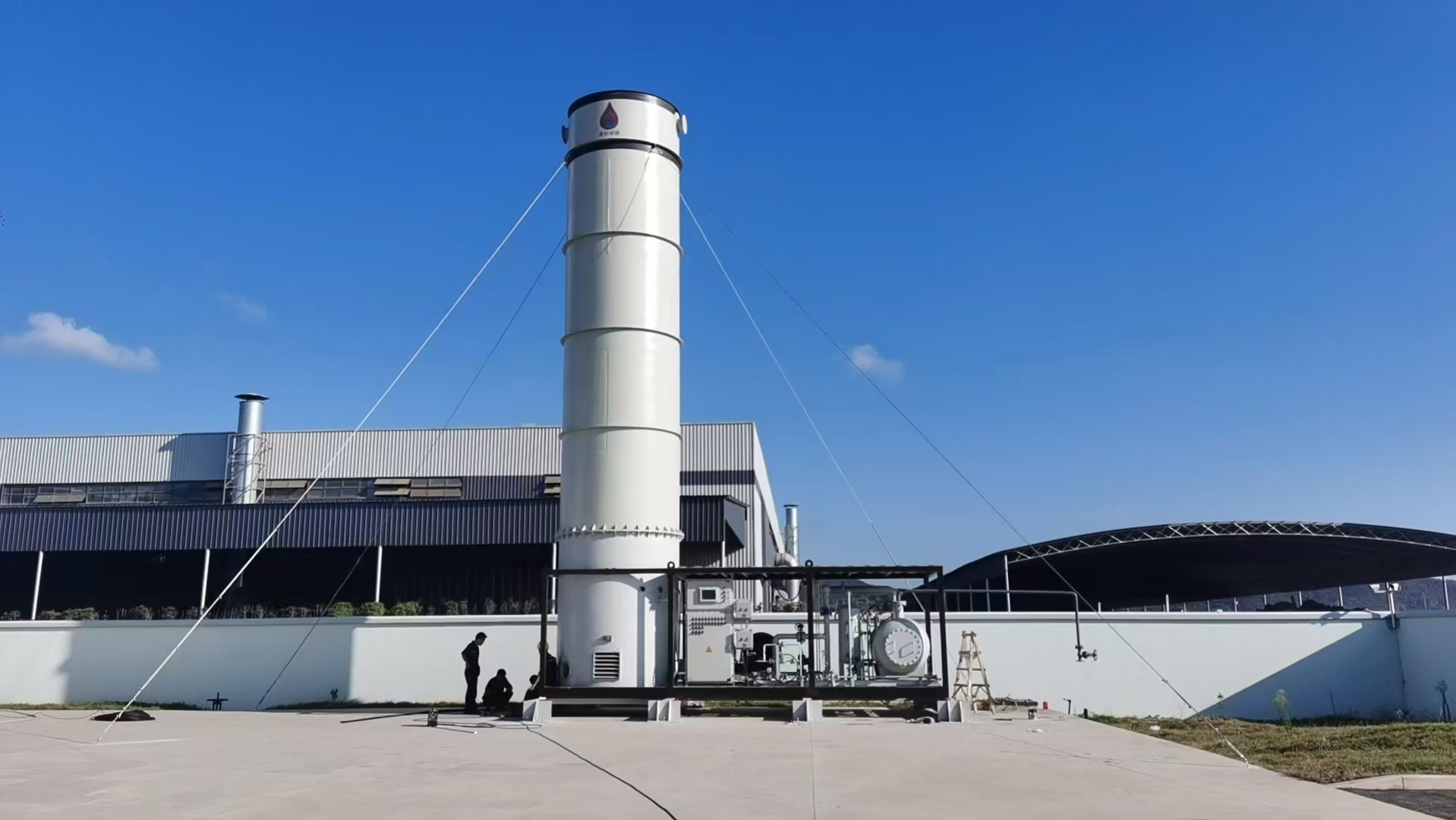
Skid-mounted enclosed ground flare — modular packaging that reduces field construction scope compared with conventional field-built systems.
Downstream Waste Gas Treatment and Heat Recovery
Where the waste-to-energy site has additional vapour-phase streams, the flare is often specified together with thermal oxidation equipment. The ZX-TO, ZX-RTO and ZX-RCO series thermal oxidizers are designed for VOC treatment, operating at 800°C–1200°C with destruction efficiency up to 99% or higher, in direct thermal oxidation, regenerative thermal oxidation and regenerative catalytic oxidation configurations using carbon steel, SS304, SS316L and ceramic heat storage materials. Zexuan's comparison data lists VOC destruction efficiency up to ≥99% depending on design for this class of equipment, with heat recovery options available to improve energy utilisation.
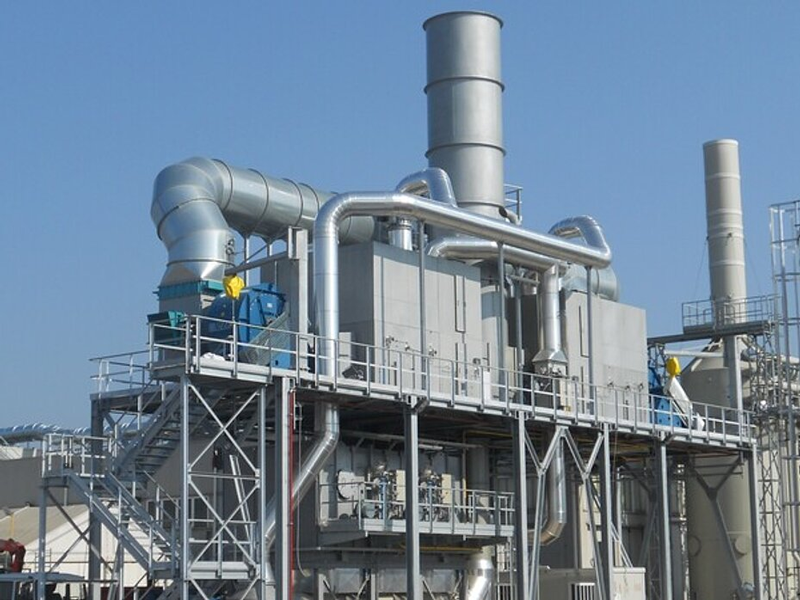
Regenerative Thermal Oxidation (RTO) system — thermal treatment companion to flare systems on waste-to-energy sites.
Step-by-Step Breakdown: From Gas Data to Commissioned Methane Combustion
Execution sequence: the seven steps below follow the order in which design inputs become binding commitments — each step constrains the next, and skipping ahead is what creates rework during commissioning.
1. Collect the gas and site data. Design inputs are gas flow, gas composition, pressure, temperature and site conditions. For landfill gas and digester gas, flow range and composition variability drive more of the outcome than a single peak figure.
2. Match the configuration to the site. Select open elevated or enclosed ground based on available plot, environmental limits and operating preference. Enclosed ground configurations are designed with low radiation and low noise and suit limited-space areas; elevated configurations suit projects where a stack is specified or preferred.
3. Select materials against the gas composition. Apply corrosion-resistant material selection based on gas composition, using stainless steel and high-temperature alloys where required. Confirm welding quality inspection and surface treatment and coating protection are in the scope of supply.
4. Lock the safety and control architecture. Confirm automatic ignition, flame detection, PLC-based control, safety interlock design and factory functional testing are specified as a system, not as separate line items.
5. Verify structure and fabrication. Structural verification covers structural design according to project conditions, wind load and stability analysis, welding inspection and dimensional inspection before shipment — the control path for wind load, vibration and structural fatigue risk.
6. Test before shipment and on site. Acceptance criteria are the Factory Acceptance Test (FAT) plus the Site Acceptance Test (SAT). FAT confirms function and interlocks in the workshop; SAT confirms the commissioned system behaves in the real gas and site environment.
7. Plan commissioning and long-term support. Integrated project management covers engineering design review, production planning, quality inspection during manufacturing, installation guidance and commissioning support. For a continuous-duty biogas plant, the support arrangement after commissioning is as important as the equipment specification.
Use Cases: Where Biogas Flare Systems Fit in Waste-to-Energy
Landfill Gas (LFG) at Operating and Closed Sites
Continuous, low-pressure methane generation with a flow profile that declines and fluctuates over the site lifecycle. Controlled combustion converts the collected gas into controlled combustion products with destruction efficiency typically ≥98% depending on system design.
Digester Gas and Wastewater Treatment Gas
Digester gas generation is steady but tied to plant operation, so turndown and ignition reliability carry more weight than peak capacity. Automatic ignition, flame detection and PLC-based control are the relevant specification points.
Pyrolysis and Waste-to-Energy Off-Gas
Zexuan lists waste tire pyrolysis plants, plastic pyrolysis projects and remote industrial sites among the best-fit applications for modular skid-mounted flare solutions, where the modular design allows faster installation and easier relocation, with installation time reducible compared with conventional field-built systems depending on project scope.
Chemical and Industrial Process Vent Gas
Two flare systems were installed at a chemical manufacturing plant in China for the safe combustion of process vent gas generated during DL-Methionine production. The implementation period exceeded one year, the system was customised as a flare system solution for complex chemical process gas, and it achieved reliable treatment of process off-gas, improved production safety and stable operation.
Comparison: Open Elevated vs Enclosed Ground Biogas Flare
| Decision factor | Open elevated flare | Enclosed ground flare |
|---|---|---|
| Thermal radiation | Higher radiation to surroundings | Can be reduced significantly depending on design conditions |
| Noise | Higher at grade | Can be controlled to meet project requirements |
| Visual impact | Visible stack | Reduced visual impact |
| Best suited to | Sites where a stack is specified or plot access is unrestricted | Industrial parks, plants near residential areas, strict environmental requirements, limited land availability |
| Cost profile | Lower initial investment | Higher initial investment, but reduced environmental impact and easier compliance |
| Maintenance access | Elevated inspection points | Easier visual inspection; routine maintenance access at ground level |
| Combustion performance | Similar combustion efficiency when properly designed | Similar combustion efficiency; better emission control and operational stability |
Source: Zexuan comparison data for enclosed ground flare systems versus open elevated flare systems.
Commercial and Execution Parameters to Compare Before Ordering
| Parameter | Zexuan standard terms (customised industrial systems) |
|---|---|
| Minimum order quantity | 1 set; systems are customised according to project requirements |
| Monthly production capacity | 5 sets per month |
| Typical production lead time | 60–120 days depending on project requirements |
| Delivery terms | EXW / FOB / CIF |
| Acceptance criteria | Factory Acceptance Test (FAT) + Site Acceptance Test (SAT) |
| Payment | T/T and L/C available; typically 30% advance payment, 70% before shipment, negotiable according to project requirements |
FAQ
1. What does API 521 compliance mean for a biogas or landfill gas flare system?
API Standard 521 (Pressure-Relieving and Depressuring Systems) is the governing design standard for flare systems, and it specifies a minimum flare header slope of 1/4 inch per 10 feet for drainage. For biogas and landfill gas projects this means the flare is designed as part of a pressure-relief and depressuring system — including header drainage and piping geometry — rather than as a standalone burner. Zexuan lists API 521 compliant design and the use of corrosion-resistant materials as special requirements for both elevated flare system and enclosed ground flare system projects of this type.
2. Can an enclosed ground flare handle continuous, low-pressure landfill gas?
Yes, provided the equipment is designed for the gas data. The ZX-EGF Series enclosed ground flare features a low-radiation design and refractory lining, with material options including carbon steel, SS304, SS316L and SS310S, an operating range of 800°C–1200°C and combustion efficiency up to 99.9%. Enclosed ground flare systems are designed with low radiation and low noise and are described as suitable for limited-space areas. Where controlled combustion replaces uncontrolled gas release, destruction efficiency is typically ≥98% depending on system design, with a significant reduction of combustible gas emissions.
3. What are the commercial terms for a customised biogas flare system?
Minimum order quantity is 1 set, because industrial flare and thermal treatment systems are customised according to project requirements rather than supplied from stock. Delivery terms are EXW, FOB or CIF. Payment terms are T/T and L/C, typically 30% advance payment and 70% before shipment, negotiable according to project requirements. Monthly production capacity for customised industrial systems is 5 sets, with a typical production lead time of 60–120 days depending on project requirements — the binding constraint for most project schedules.
4. How is a biogas flare validated before shipment and on site?
Acceptance criteria are the Factory Acceptance Test (FAT) and the Site Acceptance Test (SAT). Before shipment, factory functional testing covers the automatic ignition system, flame detection, PLC-based control and safety interlocks, together with welding inspection and dimensional inspection. Structural verification includes structural design according to project conditions and wind load and stability analysis, which addresses wind load, vibration and structural fatigue risk. After delivery, integrated project management continues through installation guidance and commissioning support.
5. How do buyers evaluate a long-term Flare Systems supply partner in China?
For a continuous-duty biogas or landfill gas plant, the evaluation is less about a single quotation and more about whether the supplier can repeat delivery over the project lifetime. Shandong Zexuan Environmental Protection Technology Co., Ltd. was established in 2015, operates a 24,100 m² manufacturing base with more than 80 employees including 30+ engineering and technical specialists, and reports an annual manufacturing capacity of 60+ sets of flare and thermal treatment systems, with international project experience in more than 10 countries across the Middle East, Central Asia, Southeast Asia, Africa and Russia. The company provides integrated engineering design, equipment manufacturing, installation and commissioning, and technical support. Buyers who want to compare this against their own project requirements can download the company brochure at Shandong Zexuan company brochure, or send the gas data and site conditions directly to alice@zexuaneco.com to start a configuration review.
Conclusion: Turning Biogas Methane into a Controlled Combustion Process
Methane combustion in a waste-to-energy project is a configuration decision before it is an equipment purchase. Continuous generation, low pressure and variable flow point toward project-tailored design rather than standardized equipment with fixed universal specifications. Where land is limited or the site sits close to receptors, the enclosed ground flare configuration delivers low radiation, low noise, reduced visual impact and ground-level maintenance access; where a stack is specified, elevated configurations — self-supported, guyed-wire, derrick-supported or demountable — remain the reference solution.
The execution discipline is equally clear: material selection driven by the gas analysis, API 521 compliant design, ignitions and interlocks verified by factory functional testing, FAT and SAT acceptance, and a supplier whose production capacity and lead time can actually carry the project schedule.
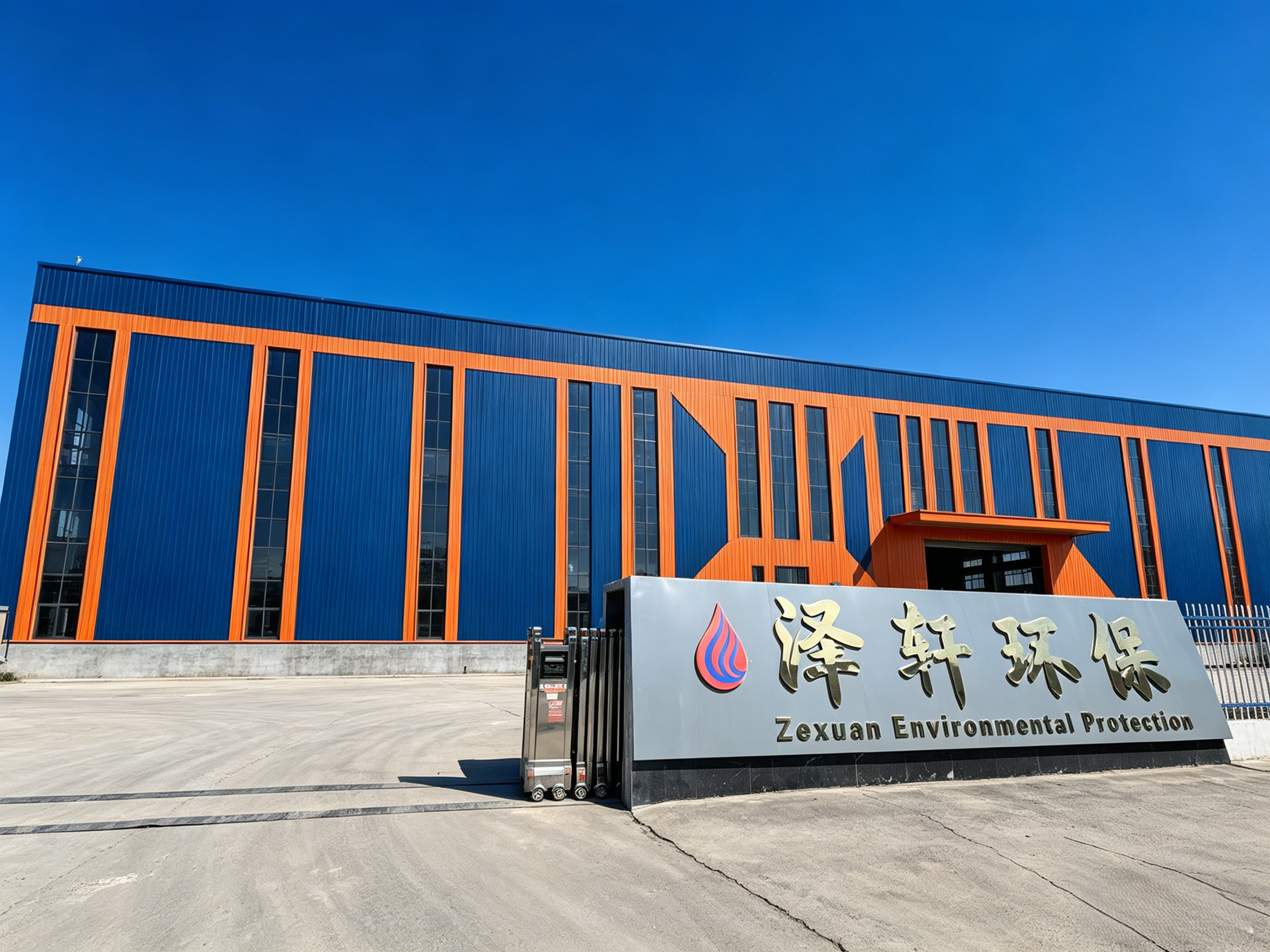
Manufacturing base — Shandong Zexuan Environmental Protection Technology Co., Ltd.
Next step: send your landfill gas or digester gas data — flow range, composition, pressure, temperature and site conditions — for a configuration review, or download the brochure to compare the full range. Email alice@zexuaneco.com · Tel / WhatsApp +86 18678831572 · www.zexuaneco.com · Download the Zexuan brochure (PDF). Headquarters: No. 2000, Shunhua Road, Innovation Zone, Jinan, Shandong, China. Manufacturing base: Huji Industrial Park, Mudan District, Heze, Shandong, China.
Have Questions or Need More Details?
Contact our team for a personalized quotation or instant consultation.
Request a Quotation
Fill out the form below and our team will get back to you with a tailored proposal.
WhatsApp Direct Chat
Prefer to chat in real-time? Message us on WhatsApp for instant assistance & quick answers.
- Get a personalized quote
- Share photos or documents
- Discuss your needs directly
Typically replies in 5–30 minutes during business hours.