OEM Flare Systems Manufacturing: How to Customize, Validate, and Scale with a Chinese Engineering Partner
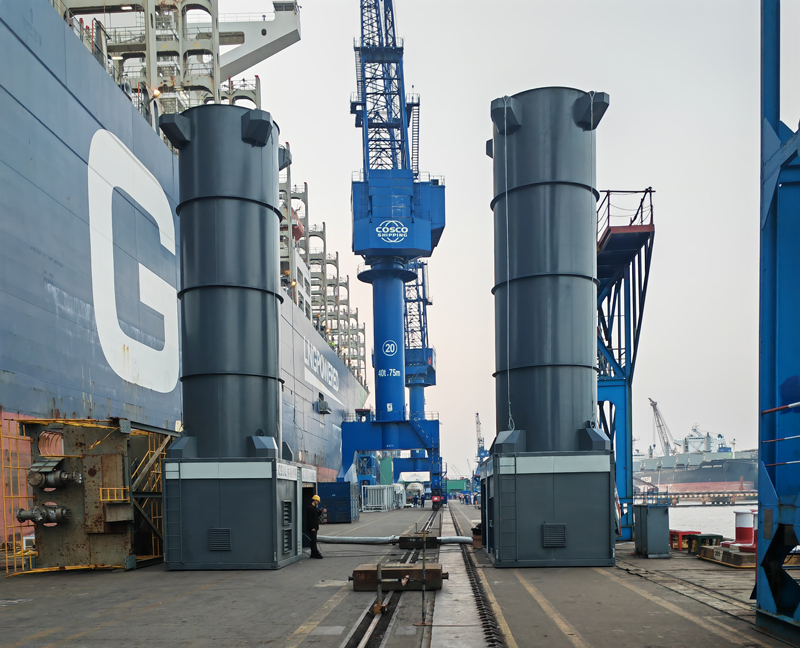
OEM flare manufacturing requires more than fabrication — it requires process design, material selection, and acceptance testing aligned with the buyer's project spec.
Buyers who need an OEM flare systems manufacturer are usually not looking for a standard catalog product. They are looking for a partner who can engineer a flare system around a specific gas composition, site constraint, control philosophy, or brand requirement. This article explains how OEM and ODM flare system projects work in practice, what customization options are available, how quality is controlled before shipment, and how to evaluate a Chinese manufacturer for an Evaluation-to-Execution buying process.
What Does an OEM Flare Systems Manufacturer Actually Provide?
An OEM flare systems manufacturer is a company that designs and builds flare systems that another company sells under its own brand or integrates into a larger project. A capable manufacturer typically operates in several production modes: manufacturer, OEM, ODM, and engineering solution provider. In practice, this means the buyer can purchase a standard system, request a custom design under their own brand, or outsource the full engineering and manufacturing scope including process design, mechanical engineering, structural design, and automation control.
Shandong Zexuan Environmental Protection Technology Co., Ltd. (Zexuan) is one such manufacturer. Established in 2015, Zexuan specializes in industrial flare systems, thermal treatment equipment, and waste gas combustion solutions. The company operates a 24,100 m² manufacturing base with more than 80 employees, including over 30 engineering and technical specialists. Its product range covers elevated flares, enclosed ground flares, skid-mounted LNG/LPG flares, flare tips, thermal oxidizers (TO/RTO/RCO), industrial incineration systems, and flue gas treatment equipment.
For an OEM buyer, the key point is that Zexuan can act as the engineering and production backbone — taking responsibility for process calculations, equipment selection, fabrication, and factory testing — while the buyer focuses on project integration, site installation, or final brand delivery.
Why OEM and ODM Flare Manufacturing Requires Capability Beyond Fabrication
Flare systems are safety-critical equipment. They handle emergency relief, process vent gas, and continuous or intermittent flows that must be combusted safely and often silently. A flare that fails during an emergency event is not just an equipment failure — it can become a plant safety incident.
In the current market context, global flaring volumes are under heavy regulatory scrutiny. The World Bank estimates that global gas flaring reached 151 billion cubic meters in 2024, the highest level since 2007. This pressure is pushing more plant owners and EPC contractors to procure better engineered, lower emission, and more reliable flare systems. For OEM buyers, this means the manufacturer's engineering capability matters as much as its welding shop.
A credible OEM flare manufacturer should be able to cover:
- Process design and combustion engineering for different gas compositions and flow regimes
- Mechanical and structural design, including flare height, wind load, thermal stress, and support structure selection
- Automation control, including ignition systems, PLC control, and explosion-proof control cabinets
- Material selection based on temperature, corrosion resistance, and gas properties
- Factory acceptance testing before shipment
- Documentation, including process datasheets, layouts, material certificates, and FAT reports
Zexuan's engineering team includes process design, combustion technology, mechanical engineering, structural design, and automation control disciplines. This is the kind of multidisciplinary coverage that separates an OEM engineering partner from a simple equipment fabricator.
OEM Customization Options for Flare Systems
OEM projects usually require customization across multiple dimensions. Zexuan lists the following customization scope for flare and thermal treatment systems:
- Flare type: elevated (self-supported, guyed-wire, derrick-supported, demountable), enclosed ground flare, skid-mounted, or mobile trailer configurations
- Capacity: gas flow rate, number of burners, flare tip diameter, and turndown requirements
- Material: carbon steel, hot-dip galvanized steel, SS304, SS316L, SS310S, Inconel 625, Hastelloy, or other high-temperature and corrosion-resistant alloys depending on process conditions
- Structure: stack height, support system, foundation interface, wind and seismic considerations, layout constraints
- Control system: automatic ignition, PLC control, explosion-proof control cabinet, remote monitoring, and integration with plant DCS
- Layout and packaging: skid-mounted design for fast installation, modular construction, or site-erected configuration
- Voltage and electrical: control and ignition systems matched to site power requirements
- Documentation: datasheets, drawings, manuals, and certification packages aligned with the buyer's project or brand requirements
This breadth is important for OEM buyers. If the manufacturer can only customize one or two parameters, the buyer ends up redesigning the system or accepting a poor fit. If the manufacturer can customize the full system — from flare type to documentation language — the buyer can truly put their own brand or project stamp on the final product.
Product Portfolio Relevant to OEM Flare Projects
An OEM partner should also offer a portfolio that covers different site scenarios, so the buyer is not forced into one technology. Zexuan's main product series are relevant across the flare and combustion spectrum:
Elevated Flare Systems
Zexuan offers self-supported, guyed-wire, derrick-supported, and demountable flares under the ZX-SSEF, ZX-GWF, ZX-DSF series. Typical parameters include flare heights from 10 m up to 150 m+, operating temperatures up to 1100°C, turndown ratios up to 100:1, and combustion efficiency typically between 98% and 99.9% depending on design conditions. Common materials include carbon steel, hot-dip galvanized steel, SS304/SS316L, SS310S, and Inconel 625 for high-temperature parts.
Enclosed Ground Flare (ZX-EGF Series)
The ZX-EGF Series enclosed ground flare is designed for low radiation and low noise operation, making it suitable for limited-space industrial sites. It operates at 800°C–1200°C with combustion efficiency up to 99.9%, and uses materials including carbon steel, SS304, SS316L, SS310S, and refractory lining. Typical applications include petrochemical parks, chemical plants, LNG terminals, and hazardous gas treatment.
Skid-Mounted LNG/LPG Flare (ZX-SMF Series)
Zexuan's ZX-SMF Series covers LNG terminal flares, LNG bunkering flares, LPG emergency flares, and mobile flare units. Capacity is customized according to gas release rate, the system is compatible with cryogenic service, and the compact skid-mounted design supports fast installation and commissioning. Materials include carbon steel, SS304, SS316L, and low-temperature materials for LNG service.
Flare Tips (ZX-FT Series)
The ZX-FT Series includes sonic, smokeless, air-assisted, and Coanda flare tips. Diameter and gas capacity are customized. Primary materials include SS316L, SS310S, and Inconel 625. Operating temperature can reach up to 1100°C, and the tips are suitable for refinery, petrochemical, LNG, and oil & gas processing applications.
Thermal Oxidizers and Incineration Systems
Zexuan also supplies ZX-TO, ZX-RTO, and ZX-RCO thermal oxidizers operating at 800°C–1200°C with VOC destruction efficiency up to 99% or higher, using carbon steel, SS304, SS316L, and ceramic heat storage materials. The ZX-INC Series hazardous waste incineration system operates at 850°C–1200°C with multi-stage combustion, heat recovery, and waste gas treatment integration.
Having this range matters for OEM buyers because a single project may require a flare for emergency relief plus a thermal oxidizer for continuous VOC abatement — working with one engineering partner simplifies interfaces and reduces coordination risk.
OEM Flare Manufacturing: Step-by-Step Process
For buyers in the Evaluation-to-Execution stage, the following is a typical OEM project workflow with a China-based manufacturer like Zexuan:
- Process data collection. The buyer shares gas composition, flow rates, pressure, temperature, and site conditions. This is the foundation for all design work.
- Engineering design. The manufacturer develops process design, combustion calculations, structural design, and control system architecture. Flare height, tip sizing, burner configuration, and material selection are confirmed.
- Quotation and commercial terms. The manufacturer issues a technical datasheet and commercial proposal. Typical payment terms are 30% advance and 70% before shipment, with T/T and L/C available. Delivery terms include EXW, FOB, and CIF. MOQ is 1 set because flare systems are customized per project.
- Manufacturing. Fabrication starts after design approval. The production process includes incoming material inspection, welding inspection, dimensional inspection, pressure/leak testing when applicable, functional testing, and 100% inspection.
- Factory Acceptance Test (FAT). The buyer or a third-party inspector can witness the FAT before shipment. FAT, together with Site Acceptance Test (SAT), is the standard acceptance procedure.
- Shipping and delivery. Depending on the commercial terms, the buyer arranges or the manufacturer handles export logistics.
- Commissioning support and after-sales. Zexuan offers remote support, commissioning assistance, spare parts, and training. Typical production lead time is 60–120 days depending on project requirements, with a monthly production capacity of about 5 sets of customized industrial systems.
Understanding this sequence helps buyers plan budgets, inspection visits, and project schedules. It also clarifies why OEM flare system lead time is usually driven by engineering review and material procurement, not just shop fabrication.
How OEM Buyers Should Evaluate a Chinese Flare Manufacturer
When evaluating a potential OEM partner — especially when production will happen in China — buyers should not rely only on sales brochures. Use the following decision criteria as a practical checklist:
1. Engineering Coverage
Check whether the manufacturer has internal process, combustion, mechanical, structural, and automation engineers. A 30+ engineering and technical specialist team, as at Zexuan, signals that design is handled in-house rather than outsourced to a third party.
2. Manufacturing Base and Capacity
Manufacturing footprint and output capacity indicate whether the factory can handle multiple projects at once. Zexuan's 24,100 m² base and monthly capacity of 5 sets of customized industrial systems are relevant reference points for order planning.
3. Certifications and Management Systems
A professional OEM manufacturer should hold recognized management system certifications. Zexuan holds:
- ISO 9001:2015 Quality Management System Certification (cert. no. 26326Q00079R001)
- ISO 14001:2015 Environmental Management System Certification (cert. no. 26326E00054R001)
- ISO 45001:2018 Occupational Health and Safety Management System Certification (cert. no. 26326S00054R001)
All three were issued by CSU International Certification Co., Ltd. and are valid until 2029-03-17. These certifications are used for government bidding and international recognition through IAF mutual recognition.
4. Quality Control and Testing Process
Ask for the manufacturer's inspection and test plan. Zexuan states that quality control includes full process inspection plus FAT before shipment, with incoming material inspection, welding inspection, dimensional inspection, pressure/leak testing when applicable, functional testing, FAT, and final inspection before shipment. The company describes its inspection coverage as 100% inspection rather than sampling only.
5. International Project Experience
OEM buyers need confidence that the manufacturer can handle export documentation, international standards, and cross-border communication. Zexuan has international project experience in the Middle East, Central Asia, Southeast Asia, Africa, Russia, and other regions, and targets industries including oil & gas, refining and petrochemical, LNG terminals, pipeline and compressor stations, chemical, municipal landfill and biogas, and metallurgy.
6. OEM/ODM Flexibility
Confirm whether the manufacturer is willing to issue products under the buyer's brand, customize documentation, and adapt the control philosophy and electrical design to the buyer's standards. Zexuan explicitly offers manufacturer, OEM, ODM, and engineering solution production services.
OEM Flare Systems vs. Standard Flare Procurement: Comparison Table
| Comparison Dimension | Standard Flare Procurement | OEM Flare Systems Manufacturing |
|---|---|---|
| Design ownership | Buyer or EPC provides design basis; supplier manufactures to drawing | Manufacturer performs full engineering design under buyer's brand or specification |
| Customization scope | Limited to minor adjustments | Flare type, capacity, material, structure, control system, layout, voltage, and documentation |
| Branding | Supplier brand | Buyer brand or project-specific nameplate; ODM options available |
| Commercial flexibility | Fixed product list, less negotiation | MOQ 1 set; payment T/T, L/C; delivery EXW/FOB/CIF; contract terms negotiable |
| Lead time | Standard production lead time | 60–120 days depending on project requirements |
| Quality control | Manufacturer standard QC | Full process inspection + 100% inspection + FAT before shipment |
| Acceptance | Often limited to documentation | FAT + SAT |
| After-sales | Limited | Remote support, commissioning assistance, spare parts, training |
This comparison shows that OEM flare procurement is not simply “buying a product.” It is a collaborative engineering engagement that shifts more responsibility to the manufacturer while giving the buyer more control over the final specification, brand, and outcome.
OEM Flare Manufacturing Use Cases
The following real project examples show how Zexuan has executed flare systems for different gas types and site conditions. For OEM buyers, these examples are useful as evidence of engineering adaptability.
Use Case 1: Chemical Process Vent Gas (China)
Zexuan supplied 2 sets of flare systems to a chemical manufacturer / fine chemical plant in China for safe combustion of process vent gas generated during DL-Methionine production. The project, which has been in operation for more than one year, achieved reliable treatment of process off-gas, improved production safety, and stable operation. The solution was customized for complex chemical process gas.
Use Case 2: Coalbed Methane Vent Gas (China)
A coalbed methane company used 1 set of ground flare system for treatment of coalbed methane vent gas. The system has been running for over 2 years, with a 90×10⁴ Nm³/d processing capacity, three-stage venting design, and PLC automatic control, achieving stable methane combustion and improved gas management safety.
Use Case 3: Oilfield Transfer Station Natural Gas Vent Gas (China)
An oil & gas company installed 1 set of enclosed ground flare system for treatment of natural gas vent gas from an oilfield transfer station. The system was completed within 1 year and includes an enclosed ground flare design, explosion-proof control cabinet, and automatic ignition system. The result was safe disposal of natural gas emissions, reduced noise and visual impact, and stable operation.
Use Case 4: Natural Gas Gathering and Transportation (China)
A natural gas processing company installed 2 sets of guyed-wire elevated flare systems for emergency venting and safe combustion of natural gas during gathering and transportation. The system features a 60 m elevated flare structure, DN350 flare tip, and automatic ignition with PLC control, achieving stable operation under harsh climate conditions and improved operational safety.
Use Case 5: Waste Tires / Plastic Pyrolysis Projects (Turkey, Iraq, Vietnam)
Zexuan has supplied skid-mounted ground flare systems to multiple pyrolysis projects outside China:
- Turkey: A skid-mounted ground flare system has been operating for over 2 years at a waste tire recycling company, providing safe combustion of pyrolysis gas and improving process safety.
- Iraq: A skid-mounted ground flare system has been operating for over 3 years at a waste tire recycling plant, successfully solving the problem of uncontrolled gas emissions and ensuring safe combustion.
- Vietnam: A skid-mounted ground flare system was used in a plastic pyrolysis project, with modular skid design for flexible installation and designed for variable gas conditions.
These cases demonstrate that Zexuan can deliver both elevated flares and enclosed/skid-mounted ground flares, and can adapt to different gas characteristics including chemical process gas, natural gas, coalbed methane, and pyrolysis gas.
Materials, Compliance, and API 521 Considerations in OEM Flare Design
OEM flare design is not complete without material and compliance alignment. Flare systems in refineries and petrochemical plants are generally designed in accordance with API Standard 521 (Pressure-Relieving and Depressuring Systems). Buyers should confirm that the OEM manufacturer understands API 521 requirements such as flare header slope, purge flow, radiation limits, and liquid carryover considerations.
For raw materials, Zexuan selects materials based on process conditions, temperature, corrosion resistance, and gas composition. Available materials include carbon steel (painted or hot-dip galvanized), SS304, SS316L, SS310S high-temperature stainless steel, Inconel 625, Hastelloy, and other high-temperature and corrosion-resistant alloys. For LNG service, low-temperature materials are used. For elevated flare high-temperature parts such as flare tips, Inconel 625 and SS310S are common choices.
OEM buyers should require a material selection statement in the technical proposal. This prevents surprises during FAT and ensures long-term service life in corrosive or high-temperature applications.
Budget, Lead Time, and Commercial Terms for OEM Flare Projects
The commercial side of OEM flare procurement is often less standardized than the technical side. From Zexuan's procurement support data, the following terms apply:
- MOQ: 1 set. Each system is customized according to project requirements.
- Payment: T/T and L/C available. Typical payment terms are 30% advance payment and 70% before shipment, negotiable according to project requirements.
- Delivery terms: EXW, FOB, or CIF.
- Lead time: 60–120 days depending on project requirements.
- Acceptance: FAT + SAT.
For budgeting purposes, buyers should understand that the price of an OEM flare system is driven by engineering scope, material grade, flare height, control system complexity, and documentation requirements. The RTO is more suitable for chemical plants, pharmaceutical plants, waste gas treatment, and VOC control projects; a flare may be paired with a thermal oxidizer for a complete gas treatment package.
Frequently Asked Questions
What services does an OEM flare systems manufacturer provide?
An OEM flare systems manufacturer provides engineering design, equipment manufacturing, installation and commissioning support, and technical after-sales service. Zexuan operates in four production modes: manufacturer, OEM, ODM, and engineering solution provider. This means a buyer can commission a flare system under their own brand, with customization of flare type, capacity, material, structure, control system, layout, voltage, and documentation.
Can an OEM flare systems manufacturer customize the system for my project?
Yes. Zexuan customizes flare systems according to project gas composition, flow rate, site conditions, and buyer requirements. Customization dimensions include elevated flare (self-supported, guyed-wire, derrick-supported, demountable), enclosed ground flare, skid-mounted LNG/LPG flare, flare tip type, burner configuration, stack height, materials from carbon steel to Inconel 625, PLC/automatic ignition control, and project documentation. MOQ is 1 set.
What is the typical lead time for OEM flare systems?
Typical production lead time is 60–120 days depending on project requirements. This varies with design complexity, material availability, and the buyer's review cycle. Monthly production capacity is approximately 5 sets of customized industrial systems. Buyers should plan for engineering review time before fabrication begins.
How does the manufacturer ensure quality control for OEM flare systems?
Zexuan states that quality control includes full process inspection and FAT before shipment. Specific checkpoints include incoming material inspection, welding inspection, dimensional inspection, pressure/leak testing when applicable, functional testing, Factory Acceptance Test, and final inspection before shipment. The company describes its inspection as 100% inspection. Acceptance inspection also includes SAT at the site after installation.
What are the payment and delivery terms for OEM flare systems from China?
Typical payment terms are 30% advance payment and 70% before shipment, with T/T and L/C available. Delivery terms include EXW, FOB, and CIF. The MOQ is 1 complete system, because each industrial flare system is customized to the project. These terms are negotiable according to project requirements.
Can I get a sample or quotation before placing an OEM flare order?
For large industrial equipment such as flare systems, a physical sample is generally not practical; instead, the manufacturer provides a detailed technical datasheet, engineering drawings, and a commercial quotation. Zexuan's sales team can share the company brochure, relevant project references, and a proposal based on your process data. After the design is agreed, the FAT allows you to inspect the completed system before shipment. You are welcome to contact Zexuan to discuss your OEM flare project and request a quotation based on your specifications.
Start Your OEM Flare Systems Project
If you are evaluating an OEM flare systems manufacturer, the next step is to share your process data and let the engineering team assess the right configuration. Zexuan can provide a technical recommendation, budget indication, and project reference details for your type of application.
- Website: www.zexuaneco.com
- Email: alice@zexuaneco.com
- Tel / WhatsApp: +86 186 7883 1572
- Manufacturer brochure: Download Shandong Zexuan Company Brochure (PDF)
Have Questions or Need More Details?
Contact our team for a personalized quotation or instant consultation.
Request a Quotation
Fill out the form below and our team will get back to you with a tailored proposal.
WhatsApp Direct Chat
Prefer to chat in real-time? Message us on WhatsApp for instant assistance & quick answers.
- Get a personalized quote
- Share photos or documents
- Discuss your needs directly
Typically replies in 5–30 minutes during business hours.