Flare System Application Guide: Refinery, LNG, Biogas & Chemical Scenarios
Flare System Application Guide: Refinery, LNG, Biogas & Chemical Scenarios
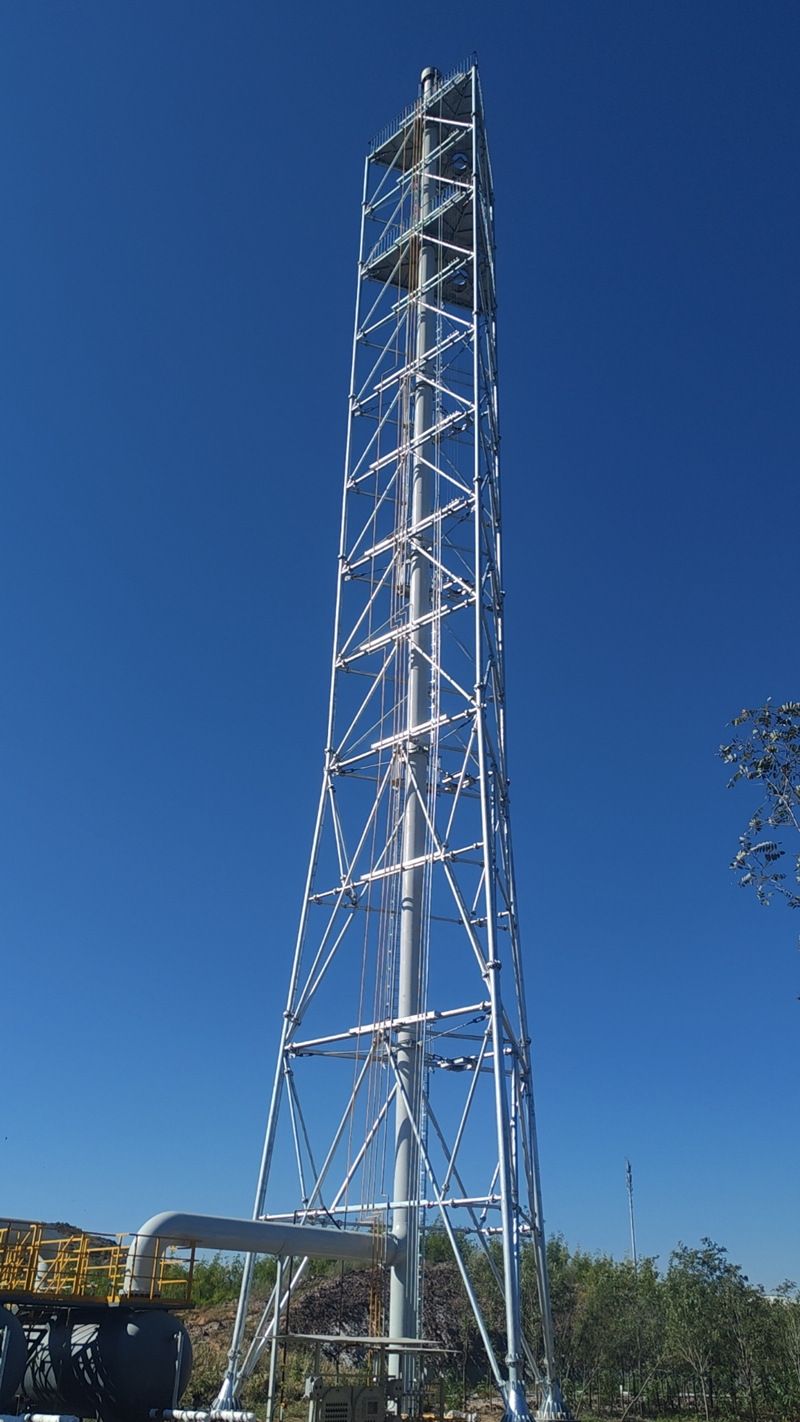
Derrick-supported elevated flare stack — one of the structural configurations Zexuan builds for refinery and petrochemical relief duty.
Matching a flare system to a project scenario reduces to four variables: the relief pressure and header conditions, the flow variability of the stream, the gas composition and heating value, and the temperature envelope the materials must survive. Once those four are fixed, the equipment class usually selects itself.
In the Zexuan portfolio the mapping is direct. Elevated flares — ZX-SSEF (self-supported), ZX-GWF (guyed-wire) and ZX-DSF (derrick-supported) — carry refinery and petrochemical overpressure and emergency venting where the design basis is set against API 521. The ZX-SMF skid-mounted LNG/LPG flare handles boil-off gas (BOG) and cryogenic emergency release at LNG terminals and bunkering sites. The ZXE-BGF biogas flare is configured for low-pressure, variable-flow landfill and digester gas. And the ZX-TO, ZX-RTO and ZX-RCO thermal oxidizers, together with the ZX-INC incineration system, cover VOC-laden and hazardous waste streams that should not be routed to an open flame at all.
Shandong Zexuan Environmental Protection Technology Co., Ltd. (brand name Zexuan) is a Chinese manufacturer of industrial flare systems and thermal treatment equipment, established in 2015, operating a 24,100 m² manufacturing base in Heze, Shandong, with headquarters in Jinan. The company handles engineering design, equipment manufacturing, installation and commissioning support for oil and gas, refining, petrochemical, LNG, chemical, landfill and biogas applications.
Why Scenario Mismatch Usually Surfaces at Commissioning
Most flare problems are not combustion problems. They are fit problems: equipment selected against a category that did not match the site. Four patterns repeat.
- Flow variability ignored. Landfill gas and digester gas arrive at low pressure and swing widely in flow. A device sized only at the design point can lose flame stability during low-flow periods, while a device sized only for the low case cannot absorb the peak.
- Wrong technology class. A continuous VOC-laden process stream that needs defined destruction efficiency belongs in a thermal oxidizer, not an open flame. A solid or liquid hazardous waste stream belongs in rotary kiln incineration. Reclassifying after the plot plan is fixed is expensive.
- Material envelope taken from average duty. Flare tips see peak temperatures, not average ones. The Inconel 625, SS310S and SS316L options on ZX-FT Series tips are what allow operation up to 1100 °C; choosing an alloy against average duty turns a capital decision into a recurring maintenance line.
- Compliance evidence missing. Under U.S. EPA NSPS OOOOb, operators can no longer assume a default 98% destruction efficiency and must demonstrate actual performance. A combustion device delivered without a monitoring and documentation path cannot support that obligation.
Industry Background: Why Scenario Fit Became a Compliance Question
Flaring is not a declining legacy practice. The World Bank reports that global gas flaring volumes reached 151 billion cubic metres in 2024, the highest level since 2007. One commercial research estimate places the global flare systems market at approximately USD 4.8 billion in 2025 (Dataintelo), a figure worth reading as a commercial estimate rather than an audited number. Either way, the installed base is being renewed rather than retired.
Regulation has moved in the same period. The U.S. EPA removed the option to assume a default 98% destruction efficiency for flares under NSPS OOOOb (40 CFR 60.5360b, effective 2024). The EPA also documents that a flare is a thermal oxidation system using an open flame without enclosure, and that properly operated flares achieve at least 98% destruction efficiency in the flare plume — a benchmark explicitly tied to how the unit is operated, not merely how it is purchased.
Two further requirements shape the refinery case specifically. In the cited EPA regulatory context, petroleum refinery flares must meet a minimum combustion-zone net heating value (NHVcz) of 270 Btu/scf on a 15-minute block period basis, with design and operating provisions referenced at 40 CFR 63.11(b) and 40 CFR 60.18(b). Steam- and air-assisted flares in that context must also be equipped with monitoring systems capable of continuously measuring, calculating and recording assist-air or assist-steam volumetric flow.
The design reference behind all of this is API 521, Pressure-relieving and Depressuring Systems, identified in the API document as identical to ISO 23251. For a buyer the practical consequence is simple: scenario matching now produces three deliverables at once — the combustion device, the monitoring architecture, and the design-basis documentation.
The Four Scenario Families and the Product Map
1. Refinery and Petrochemical: Elevated Flares Under API 521 Design
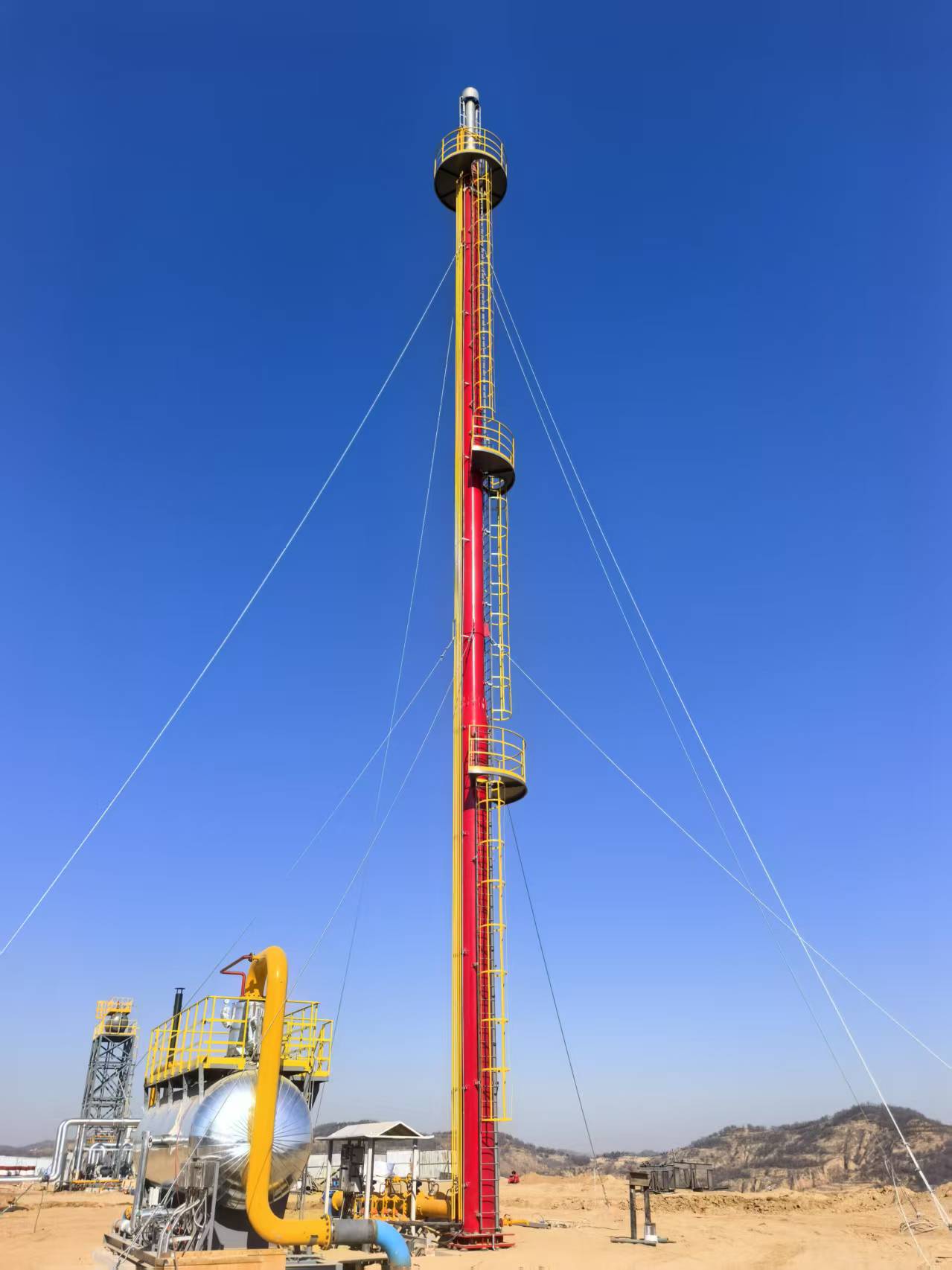
Guyed-wire elevated flare — the configuration delivered as a 60 m stack with a DN350 flare tip and PLC ignition for a natural gas gathering application.
A refinery or petrochemical site needs a device that stays out of the way for most of the year, then absorbs a large and fast release without failing. That combination — long idle periods, sudden high load, visible-flame sensitivity — is what elevated flares are built for, and it is why the structural variant matters as much as the burner.
Zexuan supplies four structural categories: self-supported elevated flares (ZX-SSEF), guyed-wire elevated flares (ZX-GWF), derrick-supported elevated flares (ZX-DSF), and demountable flares. In practice the choice is driven by stack height, available plot radius and whether the structure must later be dismantled or relocated. The ZX-GWF route was used for a Chinese natural gas processing facility, where two sets were installed for emergency venting during gathering and transportation operations: a 60 m elevated structure, a DN350 flare tip, and automatic ignition with PLC control, reported as stable operation under harsh climate conditions over more than a year of service.
Combustion performance sits in the tip. The ZX-FT Series flare tip is offered in smokeless, sonic, air-assisted and Coanda configurations, with primary materials of Inconel 625, SS310S and SS316L, operating temperatures up to 1100 °C, and customizable diameter and gas capacity for hydrocarbon gases in refinery, petrochemical, LNG and oil and gas processing industries. Where regulation requires steam- or air-assisted operation, the assist medium is also a monitoring obligation, so the tip specification and the instrumentation scope should be written together rather than sequentially.
Service roles to define in the design basis include emergency relief, process venting, start-up and shutdown venting, and continuous vent duty. A system specified only for the emergency case often under-performs in continuous low-flow service, and vice versa.
2. LNG Terminals and Bunkering: The ZX-SMF Skid-Mounted Flare
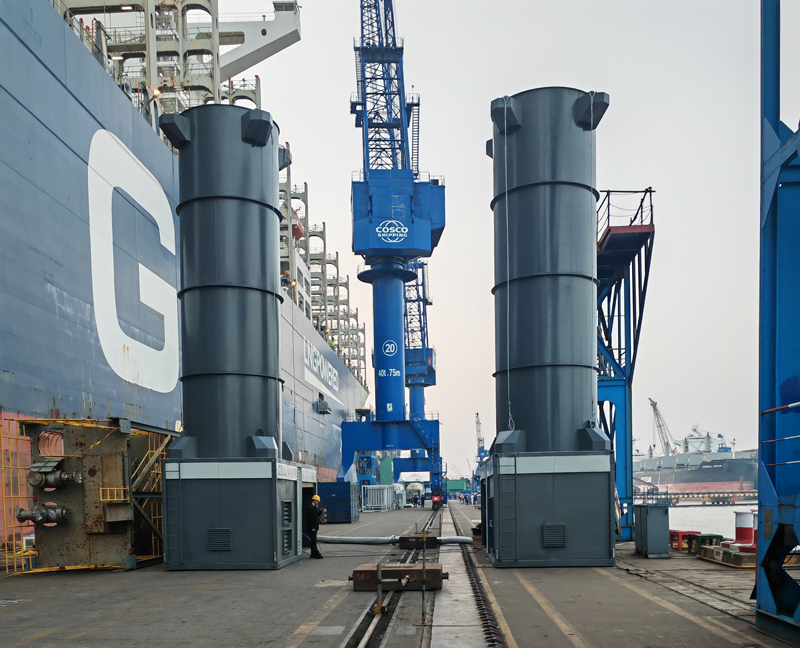
Skid-mounted shore-based LNG/LPG bunkering flare — factory-assembled module for terminal boil-off gas and emergency release duty.
An LNG terminal runs two very different flare duties: routine boil-off gas and a cryogenic emergency release. Both favour a factory-assembled module, because site work at an operating terminal is the most expensive and least flexible part of the project. The ZX-SMF Series skid-mounted LNG/LPG flare system is built around that constraint, addressing BOG and cryogenic emergency release for terminal and bunkering applications, with the ZXE-MTF mobile trailer flare available where the duty is temporary or the plot is not fixed.
The skid logic is not theoretical across the portfolio. A skid-mounted ground flare system supplied to a waste tire recycling plant in Iraq has been in operation for more than three years, treating combustible pyrolysis gas with a modular design customized to the gas characteristics and described as easy to install and operate. A comparable unit at a Turkish waste tire recycling company has run for more than two years with a compact modular structure and a customized flare solution. A skid-mounted ground flare was also delivered to a Vietnamese plastic pyrolysis project for variable gas conditions. These are different gases from LNG, but they demonstrate the same engineering point: modular fabrication with a gas-specific combustion package reduces site risk when the feed is not steady.
3. Biogas, Landfill and Digester Gas: ZXE-BGF and the Enclosed Option
Biogas is the opposite problem to a refinery release. Pressure is low, flow varies continuously, methane concentration moves with the season and the landfill cell, and the unit may run unattended between maintenance visits. The ZXE-BGF biogas flare is configured for exactly that duty profile — low-pressure, variable-flow methane destruction for landfill gas and digester gas.
Where flow variation is severe and reliability has to be demonstrated rather than asserted, control architecture does the work. A coalbed methane operator in China runs a ground flare system with a documented 90×10⁴ Nm³/d processing capacity, a three-stage venting design and PLC automatic control, in service for more than two years with stable methane combustion reported. That three-stage venting arrangement is the kind of detail that separates a biogas flare that survives low-flow periods from one that does not.
A second consideration is the site boundary. Where the plant needs the flame concealed and noise reduced, the ZX-EGF Series enclosed ground flare is the relevant configuration: a low-radiation design with refractory lining, material options of carbon steel, SS304, SS316L and SS310S, an operating range of 800 °C to 1200 °C, combustion efficiency up to 99.9%, and intended application at LNG terminals, chemical plants and petrochemical parks. At a Chinese oilfield transfer station, one enclosed ground flare system was completed within a year to treat natural gas vent gas, with an enclosed ground flare design, an explosion-proof control cabinet and an automatic ignition system, reported as safe disposal of emissions with reduced noise and visual impact.
4. Chemical, VOC and Hazardous Waste: Thermal Oxidizers and Incineration
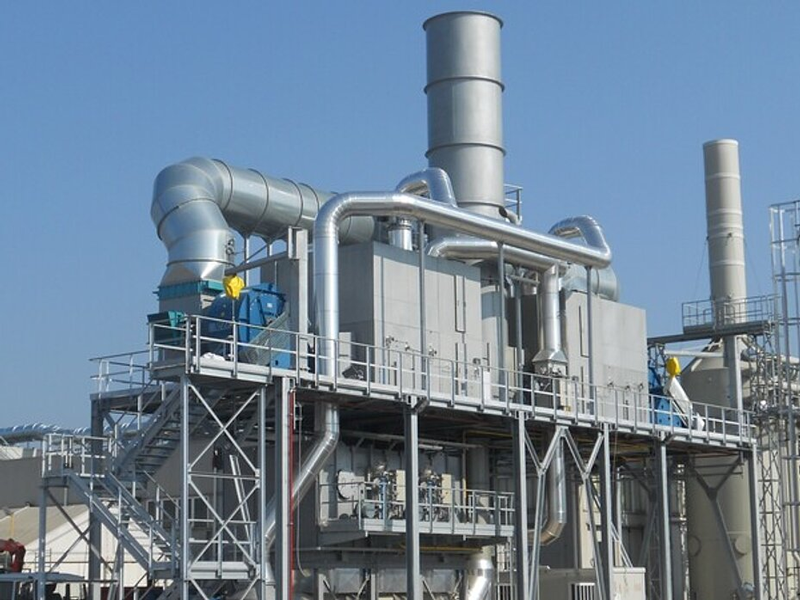
Regenerative thermal oxidation (RTO) system — one of three thermal oxidizer configurations Zexuan builds for VOC-laden process streams.
Not every gas stream should go to an open flame. Where the stream is a continuous process vent carrying VOCs and the project has to demonstrate destruction efficiency, a thermal oxidizer is the correct class. Zexuan builds three configurations: the ZX-TO Series for direct thermal oxidation, the ZX-RTO Series for regenerative thermal oxidation, and the ZX-RCO Series for regenerative catalytic oxidation. All three operate between 800 °C and 1200 °C with destruction efficiency up to 99% or higher, and use carbon steel, SS304, SS316L and ceramic heat storage materials. Within the range, RTO is the configuration positioned for chemical plants, pharmaceutical plants, waste gas treatment and VOC control projects.
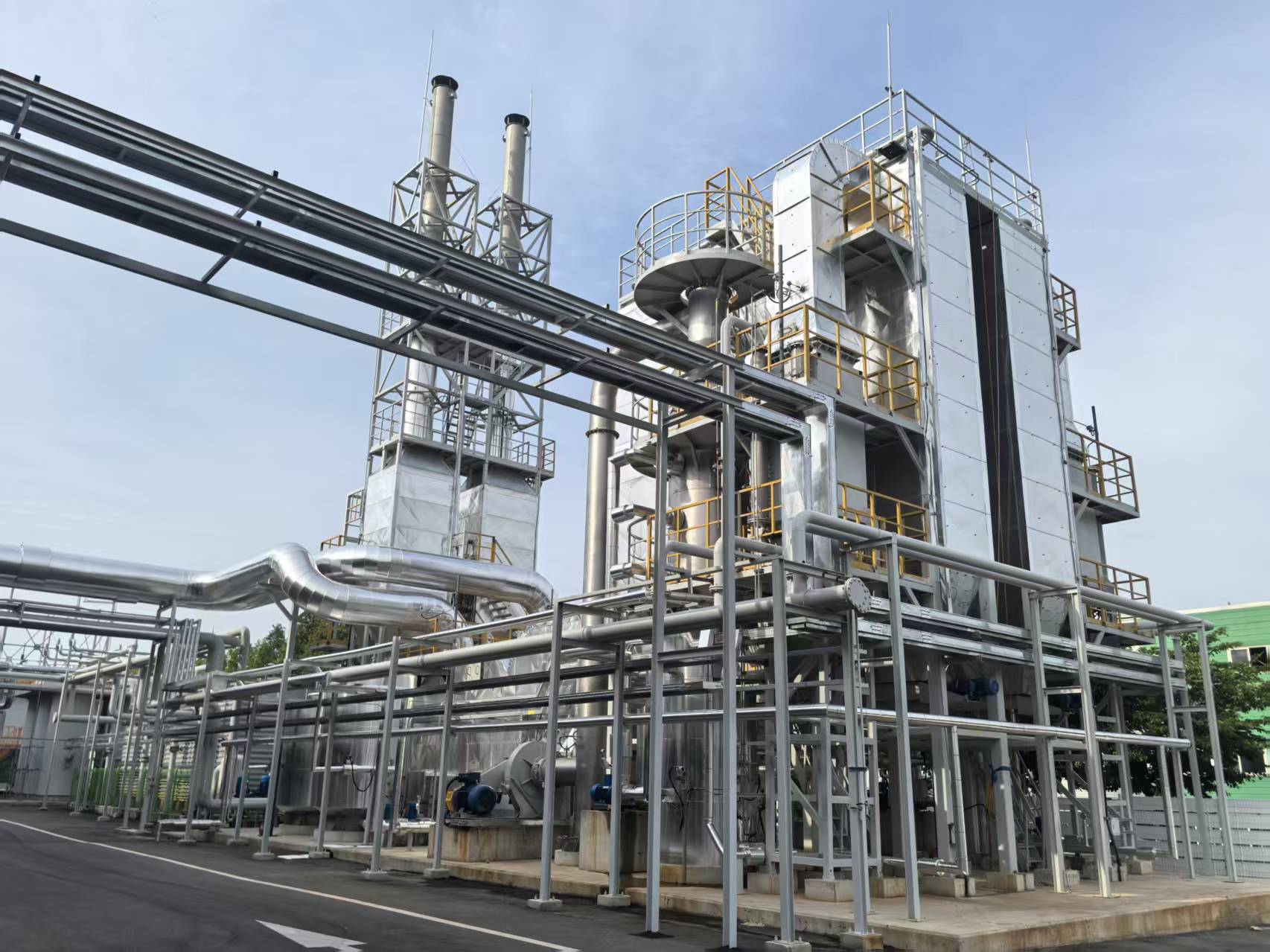
Industrial multi-purpose waste incineration system — rotary kiln configuration for solid, liquid and hazardous waste streams.
Solid, liquid and hazardous waste is a different class again. The ZX-INC Series hazardous waste incineration system is a rotary kiln incinerator operating at 850 °C to 1200 °C with multi-stage combustion, heat recovery and integrated waste gas treatment, using carbon steel, SS310S, refractory materials and high-temperature alloys. Integration is the point: combustion, heat recovery and flue gas treatment are specified as one system rather than three packages with interfaces left to the site. A Korean waste tire recycling company operates three sets of flue gas treatment equipment on tire pyrolysis exhaust as part of an integrated environmental treatment solution.
The boundary between the classes is therefore readable in one line: elevated or enclosed flares for high-volume hydrocarbon relief and venting, thermal oxidizers for continuous VOC-bearing process streams with a destruction-efficiency obligation, and rotary kiln incineration for solid, liquid and hazardous waste.
Scenario-to-Product Selection Framework
The following sequence keeps the equipment decision tied to the process data rather than to a product catalogue. It is written for the evaluation-to-execution stage, where the design basis is still open but the purchase order is close.
- Fix the design basis and enumerate every relief scenario. Use API 521 as the reference frame for pressure-relieving and depressuring, and list each case separately: emergency relief, start-up, shutdown, continuous vent, and any planned flaring. A single design point hides the case that will actually govern.
- Size the flow envelope, not the flow average. Establish minimum, normal and maximum flow, plus purge and turndown behaviour. On biogas and landfill duty this step usually decides the control architecture; on refinery duty it decides the tip and the stack diameter.
- Characterise the gas. Heating value drives combustion stability and, in U.S. refinery contexts, the NHVcz limit of 270 Btu/scf cited by the EPA is a design constraint rather than an operating preference. VOC concentration drives oxidizer selection instead.
- Set the temperature and material envelope from the peak case. Tips up to 1100 °C in Inconel 625, SS310S or SS316L; enclosed ground flares from 800 °C to 1200 °C with refractory lining; oxidizers from 800 °C to 1200 °C; rotary kiln incineration from 850 °C to 1200 °C. Material selection follows the peak, never the average.
- Choose the structural or enclosure configuration against site constraints. Self-supported, guyed-wire, derrick-supported or demountable for elevated duty; enclosed ground flare where flame concealment and noise reduction are required; skid-mounted where site work is the bottleneck.
- Specify ignition, control and monitoring as one package. Automatic ignition and PLC control are standard in delivered Zexuan projects; where steam or air assistance is used, continuous assist-flow monitoring capability has to be in the same scope.
- Lock documentation and acceptance before fabrication. Factory Acceptance Test and Site Acceptance Test are the acceptance route, supported by incoming material inspection, welding inspection, dimensional inspection, pressure and leak testing where applicable, functional testing and final inspection.
- Plan installation and lifecycle support. Remote support, commissioning assistance, spare parts and training should be contracted at the same time as the equipment, not after the first maintenance interval.
Scenario Mapping Table
| Project scenario | Zexuan series | Documented basis |
|---|---|---|
| Refinery and petrochemical overpressure, emergency relief, start-up and shutdown venting | ZX-SSEF, ZX-GWF, ZX-DSF elevated flares; ZX-FT tips | Self-supported, guyed-wire, derrick-supported and demountable categories; API 521 design reference; tips up to 1100 °C in Inconel 625, SS310S, SS316L |
| LNG terminal boil-off gas and cryogenic emergency release; bunkering | ZX-SMF skid-mounted LNG/LPG flare; ZXE-MTF mobile trailer flare | Listed in the Zexuan product scope for LNG flare and skid-mounted duty |
| Landfill gas and digester gas at low pressure with variable flow | ZXE-BGF biogas flare | Configured for low-pressure, variable-flow methane destruction |
| Sites requiring flame concealment, low radiation and reduced noise | ZX-EGF enclosed ground flare | 800–1200 °C; combustion efficiency up to 99.9%; low radiation design with refractory lining |
| Continuous VOC-bearing process streams requiring demonstrated destruction efficiency | ZX-TO, ZX-RTO, ZX-RCO thermal oxidizers | 800–1200 °C; destruction efficiency up to 99% or higher; ceramic heat storage media |
| Solid, liquid and hazardous waste | ZX-INC hazardous waste incineration system | Rotary kiln; 850–1200 °C; multi-stage combustion with heat recovery and waste gas treatment integration |
| Pyrolysis and other variable off-gas streams | ZX-SMF skid-mounted ground flare | Delivered units in Iraq (over 3 years), Turkey (over 2 years) and Vietnam |
Documented Operating Envelopes
| Series | Temperature range | Materials | Documented application |
|---|---|---|---|
| ZX-FT flare tip | Up to 1100 °C | Inconel 625, SS310S, SS316L | Smokeless, sonic, air-assisted and Coanda operation; refinery, petrochemical, LNG and oil and gas processing |
| ZX-EGF enclosed ground flare | 800–1200 °C | Carbon steel, SS304, SS316L, SS310S | LNG terminals, chemical plants, petrochemical parks; combustion efficiency up to 99.9% |
| ZX-TO, ZX-RTO, ZX-RCO | 800–1200 °C | Carbon steel, SS304, SS316L, ceramic heat storage materials | VOC treatment; destruction efficiency up to 99% or higher |
| ZX-INC incineration system | 850–1200 °C | Carbon steel, SS310S, refractory materials, high-temperature alloys | Rotary kiln for solid, liquid and hazardous waste |
| ZX-GWF guyed-wire elevated flare (delivered) | Project-specific | Project-specific | 60 m stack, DN350 flare tip, automatic ignition with PLC control, natural gas gathering, China |
Use Cases: How the Mapping Reads in Delivered Projects
The scenario logic is easier to judge against delivered equipment than against a specification sheet. The projects below are drawn from Zexuan project records.
- Fine chemical plant, China — process vent gas. Two flare systems were supplied for safe combustion of process vent gas generated during DL-Methionine production, with a customized flare solution for a complex chemical process gas and more than a year of operation reported as stable with improved production safety. The reference unit is a derrick-supported elevated flare.
- Natural gas processing company, China — emergency venting. Two guyed-wire elevated flare systems with a 60 m elevated structure, DN350 flare tip and automatic ignition with PLC control, providing emergency venting and safe combustion during gathering and transportation, reported as stable under harsh climate conditions.
- Oil and gas company, China — oilfield transfer station. One enclosed ground flare system completed within one year to treat natural gas vent gas, with an enclosed ground flare design, explosion-proof control cabinet and automatic ignition system; reported outcomes were safe disposal, reduced noise and visual impact, and stable operation.
- Coalbed methane operator, China — high-volume vent gas. One ground flare system with a documented 90×10⁴ Nm³/d processing capacity, a three-stage venting design and PLC automatic control, in service for more than two years with stable methane combustion.
- Waste tire recycling, Iraq — pyrolysis gas. One skid-mounted ground flare system in operation for more than three years, with a skid-mounted modular design customized to pyrolysis gas characteristics, described as easy to install and operate and effective in controlling uncontrolled gas emissions.
- Waste tire recycling, Turkey — pyrolysis gas. One skid-mounted ground flare system with a compact modular structure and customized flare solution, in operation for more than two years with stable operation and improved process safety.
Materials and the Outdoor Operating Environment
Flare and thermal treatment equipment operates in the open air, which means the material specification has to survive two different loads at once: the thermal load of combustion and the structural load of a tall outdoor installation.
On the thermal side, the credible selections are narrow and well defined. Inconel 625 and SS310S appear where peak temperature and oxidation resistance matter most — the ZX-FT tip range up to 1100 °C and the refractory-lined ZX-EGF enclosure at 800 °C to 1200 °C. SS316L and SS304 cover the corrosion-resistant wetted and structural duties in enclosed flares and oxidizer shells. Carbon steel carries the bulk structural and lower-severity duty, with ceramic heat storage media inside RTO and RCO units and refractory materials plus high-temperature alloys in the ZX-INC rotary kiln.
On the structural side, the choice between self-supported, guyed-wire and derrick-supported elevated flares is a plot-and-height decision as much as an engineering one. Guyed-wire configurations need anchor radius; derrick-supported configurations concentrate the support into a steel structure; self-supported stacks keep the footprint clear. Because the equipment sits outdoors for its whole life, that structural decision is also a maintenance decision — and it should be made together with the alloy selection rather than after it.
Customization, Quality Control and Execution Capability
Scenario matching only works if the manufacturer can actually build the variant the scenario requires. Zexuan operates as a manufacturer, OEM, ODM and engineering solution provider, with customization available across flare type, capacity, material, structure, control system, layout, voltage and documentation.
Execution parameters that matter at the purchase-order stage:
- Capacity and lead time. Monthly capacity of 5 sets for customized industrial systems, annual manufacturing capacity of more than 60 sets of flare and thermal treatment systems, and a typical production lead time of 60 to 120 days depending on project requirements.
- Order size. Minimum order quantity of 1 set, since every system is project-customized.
- Quality control. Incoming material inspection, welding inspection, dimensional inspection, pressure and leak testing where applicable, functional testing, Factory Acceptance Test, final inspection before shipment, and 100% inspection across the process.
- Acceptance. Factory Acceptance Test plus Site Acceptance Test as the documented acceptance route.
- After-sales. Remote support, commissioning assistance, spare parts and training.
- Management systems. ISO 9001:2015 (certificate 26326Q00079R001), ISO 14001:2015 (26326E00054R001) and ISO 45001:2018 (26326S00054R001), issued 18 March 2026 and valid to 17 March 2029 by CSU International Certification Co., Ltd.
- Engineering depth and reach. More than 80 employees including 30+ engineers and technical specialists, with international project experience in more than 10 countries across the Middle East, Central Asia, Southeast Asia, Africa and Russia.
FAQ
Does a reference to API 521 mean a flare system is API 521 compliant?
No. API 521 is titled Pressure-relieving and Depressuring Systems and is identified in the API document as identical to ISO 23251; it is a design reference for pressure relief and depressuring, not a product certificate. A supplier citing API 521 demonstrates familiarity with the design framework, not that a specific unit is compliant with a specific project. To close that gap, request the documented design basis, the enumerated relief scenarios, the material and inspection records, and the acceptance test plan. This has become more important since the U.S. EPA NSPS OOOOb rules removed the option to assume a default 98% destruction efficiency for flares, so performance must be demonstrated rather than presumed.
Can one manufacturer cover refinery flares, LNG skid flares, biogas flares and VOC oxidizers?
It can, provided the product scope is genuinely integrated rather than assembled from trading partners. Zexuan manufactures elevated flares in self-supported, guyed-wire, derrick-supported and demountable configurations (ZX-SSEF, ZX-GWF, ZX-DSF), enclosed ground flares (ZX-EGF), skid-mounted and mobile LNG/LPG flare systems (ZX-SMF, ZXE-MTF), flare tips (ZX-FT), thermal oxidizers (ZX-TO, ZX-RTO, ZX-RCO) and industrial incineration systems (ZX-INC). The manufacturing base covers 24,100 m² with more than 80 employees including 30+ engineers and technical specialists, annual capacity of more than 60 sets, and monthly capacity of 5 customized systems. The practical check is the factory audit and the reference list, not the catalogue.
How is a flare system priced and what are the usual commercial terms?
There is no list price, because every system is customized to the project: flare type, capacity, material, structure, control system, layout, voltage and documentation all change the scope. Quotation therefore follows the design basis rather than a catalogue number. Commercial terms available are MOQ of 1 set, delivery terms of EXW, FOB or CIF, payment by T/T or L/C with a typical structure of 30% advance and 70% before shipment (negotiable according to project requirements), and acceptance against Factory Acceptance Test plus Site Acceptance Test.
How can a buyer validate the equipment before shipment or installation?
A complete flare or thermal treatment system is not a sample product, so validation happens through inspection and testing rather than through a physical sample order — the minimum order quantity is one complete system. The documented route is Factory Acceptance Test before shipment and Site Acceptance Test on site, supported upstream by incoming material inspection, welding inspection, dimensional inspection, pressure and leak testing where applicable, functional testing, final inspection before shipment and 100% inspection. After handover, remote support, commissioning assistance, spare parts and training carry the validation into operation.
What lead time should be planned for a customized flare system?
Typical production lead time is 60 to 120 days depending on project requirements, against a monthly capacity of 5 customized industrial systems and an annual capacity of more than 60 sets of flare and thermal treatment systems. Allow additional time for engineering review, Factory Acceptance Test attendance and site logistics, and note that the schedule starts from an approved design basis rather than from the enquiry date. To move from the framework in this guide to a dated production slot, send your scenario data — flow envelope, gas composition, pressure and temperature limits, plot constraints and applicable regulations — to alice@zexuaneco.com or WhatsApp +86 186 7883 1572, and request a quotation with an indicative schedule.
Conclusion
Scenario matching is not a marketing exercise; it is the step that determines whether a flare system performs on the day it is needed. Refinery and petrochemical relief belongs with elevated flares designed against API 521, with tips specified for the peak temperature and the assist medium monitored. LNG terminals are best served by a skid-mounted module that keeps site work to a minimum. Landfill and digester gas needs a biogas flare built around low pressure and variable flow, with three-stage venting and PLC control where the duty is severe. VOC and hazardous waste streams belong in thermal oxidizers or rotary kiln incineration, where destruction efficiency can be specified and demonstrated.
Zexuan builds across all four families from a 24,100 m² manufacturing base, with ISO 9001, ISO 14001 and ISO 45001 certification, Factory Acceptance Test and Site Acceptance Test as the acceptance route, and engineering support through commissioning and after-sales. If you are at the evaluation-to-execution stage, the fastest route to a defensible specification is to compare your scenario data against the mapping above before the enquiry is written.
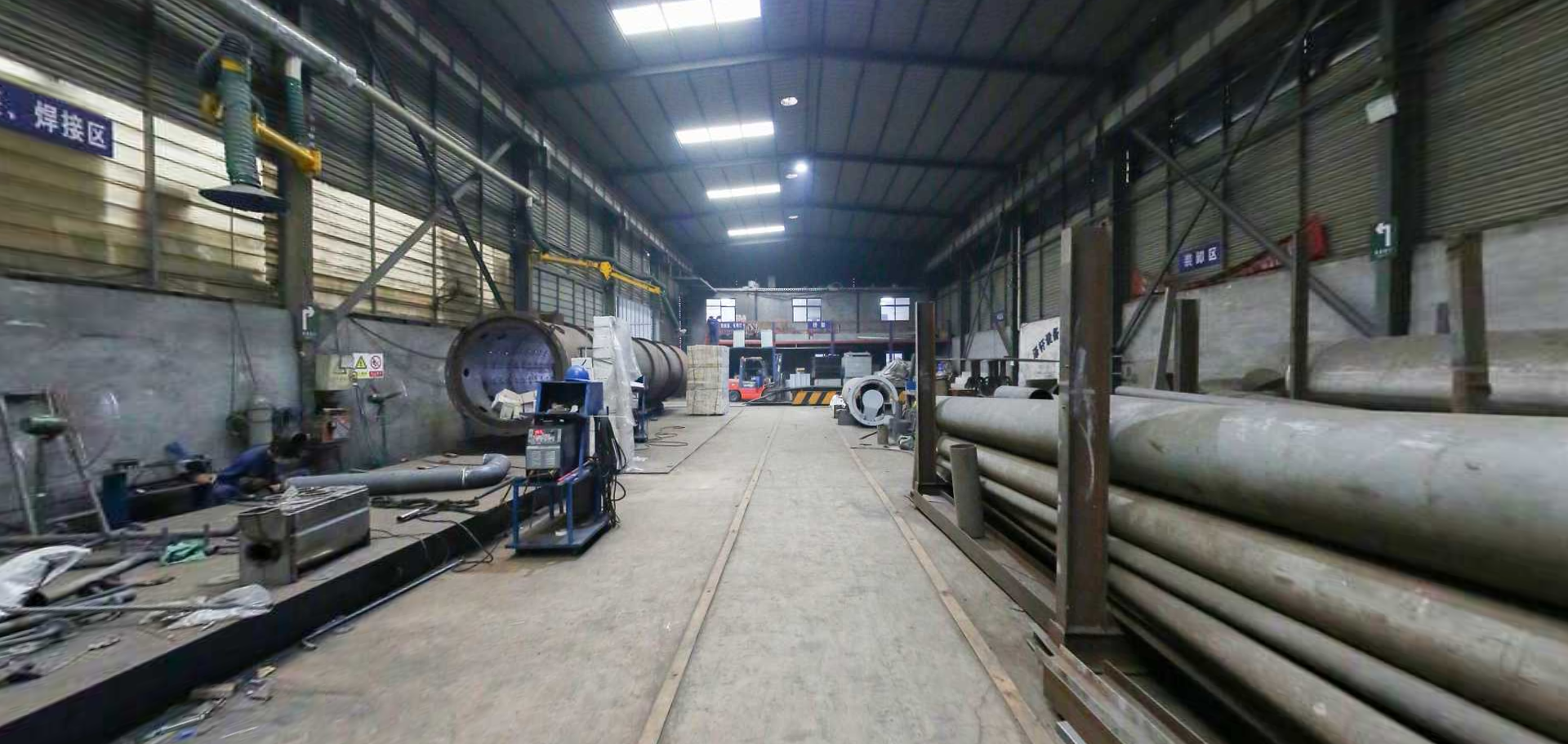
Zexuan fabrication workshop — flare systems and thermal treatment equipment are built and tested before shipment.
Next step: match your scenario to a configuration
Send your relief and venting data for a scenario-specific review, or download the Zexuan product brochure to see the full flare, oxidizer and incineration range.
Brochure: Zexuan Product Brochure (PDF)
Contact: Alice — alice@zexuaneco.com | Tel / WhatsApp: +86 186 7883 1572
Website: www.zexuaneco.com
Headquarters: No. 2000, Shunhua Road, Innovation Zone, Jinan, Shandong Province, China. Manufacturing Base: Huji Industrial Park, Mudan District, Heze, Shandong Province, China.
Have Questions or Need More Details?
Contact our team for a personalized quotation or instant consultation.
Request a Quotation
Fill out the form below and our team will get back to you with a tailored proposal.
WhatsApp Direct Chat
Prefer to chat in real-time? Message us on WhatsApp for instant assistance & quick answers.
- Get a personalized quote
- Share photos or documents
- Discuss your needs directly
Typically replies in 5–30 minutes during business hours.