Flare Tip Specification: Smokeless, Sonic, Coanda and Air-Assisted Selection Rules
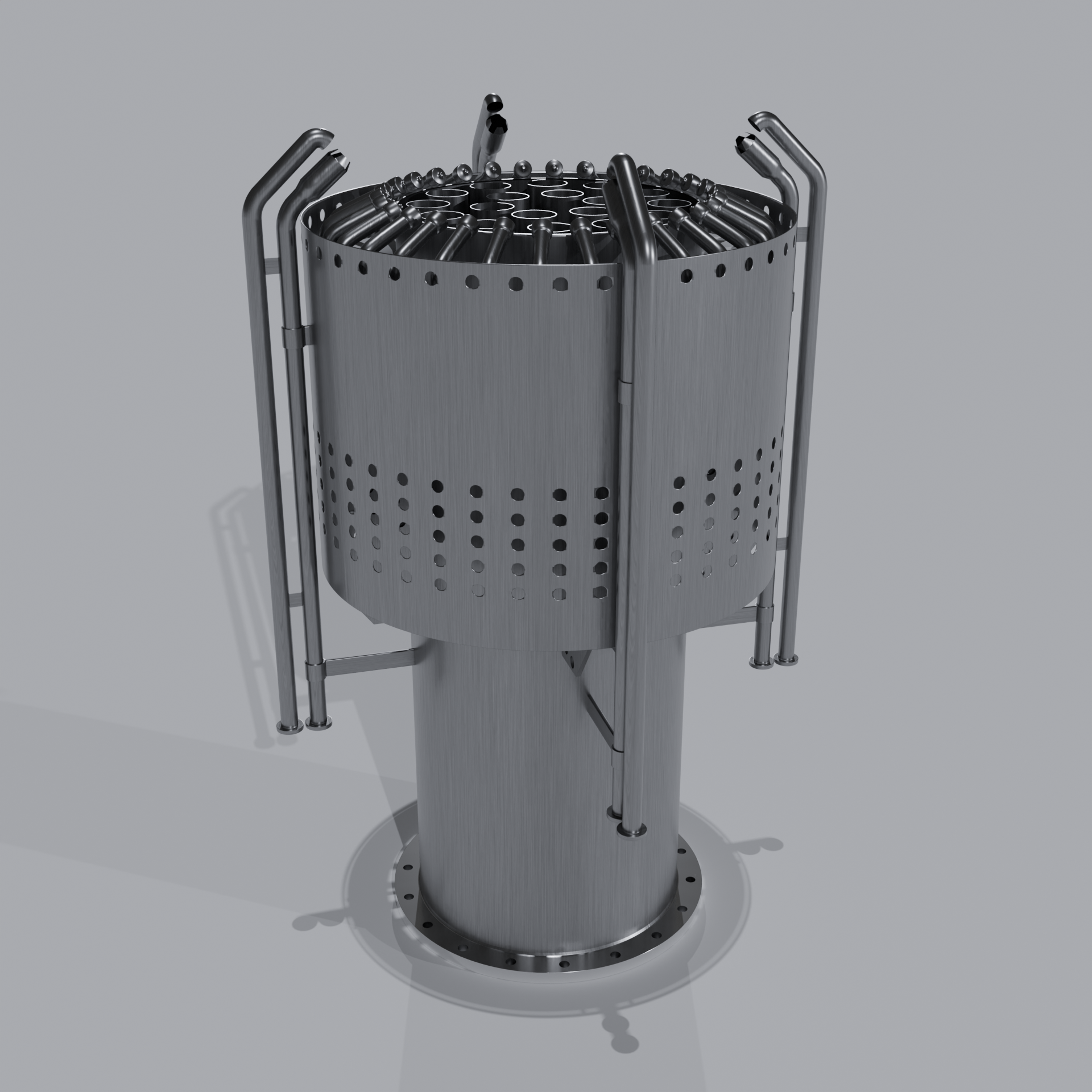
A flare tip is the point at which a flare system's design basis is either achieved or lost. The stack sets height, radiation envelope and knock-out duty; the tip decides whether the gas actually burns cleanly across the flow range the plant really operates in. The ZX-FT Series is the flare tip and industrial flare burner tip range from Shandong Zexuan Environmental Protection Technology Co., Ltd., a Chinese manufacturer of industrial flare systems and thermal treatment equipment established in 2015. The series is offered in four categories — coanda, air assisted, smokeless and sonic — with customized diameter and gas capacity, operating temperature up to 1100 °C, and material options of SS316L, SS310S and Inconel 625.
This article is written for the specification stage. It sets out the parameters to fix before a tip is quoted: gas composition and pressure regime, smokeless versus non-smokeless duty, continuous versus intermittent venting, tip diameter and gas capacity, alloy selection for high-temperature service, and the way tip design interacts with the wider flare stack envelope. It also separates what the ZX-FT datasheet states from what must be confirmed project by project — a distinction that decides how much of the tip specification is engineering and how much is assumption.
Why flare tip selection usually fails before the RFQ is issued
Most flare tip problems are commercial rather than metallurgical. They begin in an incomplete specification, and by the time the error is visible — smoking at part load, short tip life, flame instability — the stack has already been built around the assumption. Five failure patterns account for most of them.
- The tip is bought as an accessory to the stack. Stack height, structural type and radiation requirements are decided first, and the tip is added at the end as a line item. The result is a tip sized to the stack rather than to the gas.
- Smokeless duty is declared as a yes/no answer. Smokeless combustion is a duty statement tied to a flow band, not a property of the tip in all conditions. A tip configured for smokeless operation at maximum flow may be outside that envelope at low flow.
- Turndown is taken from the wrong document. A stack turndown figure is a system capability; whether the tip holds a stable flame across that range is a separate question that must be answered by the tip supplier.
- Alloy is chosen by habit. SS316L is the default answer on many projects, but the ZX-FT Series also offers SS310S and Inconel 625, and the corpus designates Inconel 625 specifically for high-temperature parts. Habit ignores the reason those options exist.
- The assist medium is assumed rather than confirmed. Steam assistance and air assistance impose different plant scope, different controls and, in the US regulatory context described below, different monitoring obligations.
Each of these is a constraint question, and constraint questions are answered by parameters. A tip specification that states composition, flow band, smokeless envelope, duty mode and alloy zone by zone removes most of the risk before a single quotation is compared.
What has changed in flare tip specification
Regulatory expectations around flare performance have become more explicit, particularly in the United States, and those expectations increasingly appear in tenders elsewhere as buyer-side requirements. The relevant reference points for a tip specification are these:
- The U.S. EPA NSPS OOOOb rules eliminate the option of assuming a default destruction efficiency of 98 percent for flares; operators must demonstrate actual performance (40 CFR 60.5360b, effective from 2024, per EPA).
- EPA states that properly operated flares achieve at least 98 percent destruction efficiency in the flare plume.
- In the cited US refinery regulatory context, EPA references a minimum combustion-zone net heating value of 270 Btu per standard cubic foot, assessed on a 15-minute block period basis.
- Steam-assisted and air-assisted flares are discussed together with monitoring systems capable of continuously measuring, calculating and recording assist air and/or assist steam volumetric flow.
- API 521 is titled Pressure-relieving and Depressuring Systems and is identified as identical to ISO 23251 in the API document.
Two practical consequences follow. First, the assist medium is now an instrumentation decision as much as a combustion one, because assist flow has to be measured and recorded. Second, the 98 percent figure can no longer be copied from a brochure into a permit application without a design basis behind it. A tip datasheet that states an operating temperature limit and a category name is a starting point, not a compliance argument.
Installed-base pressure reinforces the same point. Global gas flaring volumes reached 151 billion cubic metres in 2024, the highest level since 2007, according to World Bank data. Whatever the direction of new-build activity, the existing population of flare stacks keeps attention on tip replacement, upgrade and re-rating rather than on greenfield selection alone.
ZX-FT Series: what the datasheet fixes and what it leaves to the project
The ZX-FT Series is documented as an industrial flare burner tip range covering sonic, smokeless, air assisted and coanda categories. The datasheet fixes the following: diameter is customized; gas capacity is customized; operating temperature is up to 1100 °C; the tips are suitable for hydrocarbon gases; material options are SS316L, SS310S and Inconel 625; and the intended applications are refinery, petrochemical, LNG and oil and gas processing. The stated design attributes are customized tip design, high temperature and corrosion resistance, improved combustion performance, suitability for replacement and upgrade projects, and compatibility with various flare systems.
What the datasheet does not fix is equally important: assist-medium consumption, exit velocity, noise data, flame shape, and destruction efficiency for a specific stream. These are the values that must come out of the RFQ. Treating them as catalogue constants is the single most common specification error in tip procurement, because the tip is the one flare component whose performance cannot be read off a general arrangement drawing.
Coanda flare tip
In general industry practice, a coanda tip discharges gas through angled nozzles that follow a curved surface, so the fuel sheet draws combustion air along with it instead of relying on a separate assist medium. Coanda designs are commonly associated with smokeless operation on sites where neither steam nor blower air is available. Within the ZX-FT Series the category is named in the datasheet, while diameter and gas capacity remain customized; the assist configuration and the smokeless envelope for a given gas must be confirmed against the actual composition rather than assumed from the category name.
Sonic flare tip
A sonic tip is designed to discharge at high velocity, which increases air entrainment and moves the flame further away from the tip metal. In general practice this approach is used where the gas is heavy, where smokeless operation is difficult to hold, or where tip metal life is the limiting maintenance factor. The trade-off is noise, which is a siting and permitting consideration rather than a combustion one. The ZX-FT datasheet names the sonic category and applies the series limit of up to 1100 °C; exit velocity, sound pressure data and the flow window in which sonic conditions are actually reached must be requested for the specific stream.
Air assisted flare tip
An air-assisted tip uses forced air from a blower to promote smokeless combustion. At specification stage the consequence is system-level rather than tip-level: the plant must provide blower capacity, electrical supply, control logic and, in the US regulatory context described earlier, continuous monitoring of the assist air flow rate. Where steam is used instead, the same monitoring logic applies to steam. A buyer who specifies an air-assisted tip without specifying the blower and the flow measurement has specified roughly half of a system.
Smokeless flare tip
The datasheet names a smokeless category directly, and this is the category most often requested in refinery and petrochemical tenders. It is worth stating plainly that smokeless is a duty condition, not a permanent property. The RFQ should therefore ask for the smokeless envelope — the flow range, and the assist consumption required within it — rather than a single confirmation that the tip is smokeless.

The six selection variables that decide the tip
1. Gas composition and pressure regime
The ZX-FT Series is stated as suitable for hydrocarbon gases. Beyond that baseline, composition determines how strongly the gas tends to smoke and how much air entrainment the tip must generate: heavy and unsaturated hydrocarbons are more demanding than dry, methane-rich streams. The pressure regime decides whether a high-velocity design can physically reach its intended condition at all. In the cited US refinery context, EPA references a minimum combustion-zone net heating value of 270 Btu/scf for achieving at least 98 percent destruction efficiency — a US regulatory reference point, not a universal design rule, but a clear illustration of why heating value belongs in the data sheet rather than in a footnote. Minimum data to send with an enquiry: composition or at least molecular weight and net heating value, normal and maximum flow, gas temperature, pressure available at the tip, and whether the stream runs continuously or in batches.
2. Smokeless versus non-smokeless duty
Take one of three positions and write it down: smokeless at all times, smokeless above a stated flow, or no smokeless requirement. Each position maps to a different tip category and a different capital scope, because the first may require an assist system that the third does not. Ambiguity here is expensive in both directions — over-specifying adds blower or steam infrastructure that the site may never use, while under-specifying produces visible smoking during the first upset and a compliant-looking datasheet that cannot be defended.
3. Continuous versus intermittent venting
Continuous duty — refinery and petrochemical process venting, LNG boil-off — rewards stable combustion at low flow and long uninterrupted service. Intermittent duty — pipeline compressor station venting, start-up and shutdown, emergency relief — rewards ignition reliability and tolerance of repeated thermal cycling. Zexuan's elevated flare systems are documented with a turndown ratio of up to 100:1, and the tip must be shown to operate across that range rather than only at the maximum design flow. For intermittent service, ask how many thermal cycles the tip design anticipates and what the inspection interval should be.
4. Tip diameter and gas capacity
Both are customized in the ZX-FT Series, which means neither can be selected from a table. Diameter follows maximum flow and the exit velocity that the chosen category requires; capacity follows the process, not the other way round. Because both are customized, the RFQ must carry the numbers explicitly: minimum, normal and maximum flow, the turndown to be covered, and the design pressure at the tip inlet.
5. Material selection for high-temperature service
The ZX-FT Series offers SS316L, SS310S and Inconel 625, and the broader Zexuan material list describes SS310S as a high-temperature stainless steel and Inconel 625 as a high-temperature alloy used for high-temperature parts. The series operating temperature limit is up to 1100 °C. The datasheet does not publish a separate temperature ceiling per alloy, so the alloy decision should be made zone by zone against the calculated metal temperature of each zone, and confirmed in writing during the RFQ rather than inferred from the series limit.
| Material option | How the corpus designates it | What to confirm before selection |
|---|---|---|
| SS316L | Stainless steel grade listed as a ZX-FT tip material option | Corrosion duty of the stream: sulphur, chlorides and any corrosive constituents, plus the calculated metal temperature of the zone |
| SS310S | High-temperature stainless steel in the Zexuan material list; listed as a ZX-FT tip material option | Continuous versus cyclic temperature exposure, and the zone-by-zone metal temperature against the 1100 °C series limit |
| Inconel 625 | High-temperature alloy assigned to high-temperature parts in the Zexuan material list; listed as a ZX-FT tip material option | Which zones are actually high-temperature zones on this tip, and whether the whole tip or only specific parts are supplied in 625 |
6. Interaction with the flare stack envelope
A tip is never specified in isolation. Zexuan's elevated flare systems are documented with flare heights from 10 m to 150 m and above, a turndown ratio of up to 100:1, operating temperature up to 1100 °C, customized tip diameter, and combustion efficiency typically in the range of 98 percent to 99.9 percent depending on design and operating conditions. Those figures describe what the stack-plus-tip system can be engineered to deliver; they are not properties that a tip carries on its own. The practical implication is that the tip RFQ and the stack RFQ should be written together, because a change of tip category changes assist requirements, and a change of diameter changes the connection detail and the structural load path.

A note on terminology: no flange, tip or burner carries an API 521 certificate in the sense that a pressure vessel carries a code stamp. API 521 is a design and engineering reference, and compliance is demonstrated through the design basis, sizing calculations, material records, inspection and test plan and factory acceptance test. A supplier statement of API 521 compliance is a starting point for document review, not a substitute for it.
Step-by-step: assembling the tip specification
- Fix the design basis. Record composition or at minimum molecular weight and net heating value, minimum/normal/maximum flow, gas temperature, pressure available at the tip and the duty mode. Without this, every later step is guesswork.
- Declare the smokeless position. State whether smokeless operation is required continuously, above a defined flow, or not at all, and state which assist medium the site can actually supply — steam, blower air, or nothing.
- Define turndown and cycling. State the turndown the tip must cover and whether service is continuous or intermittent. Reference the system figure (up to 100:1 on Zexuan elevated flare systems) and ask the supplier to confirm tip performance across it.
- Select the category. Coanda, sonic, air assisted or smokeless — chosen against steps 1 to 3, with the reasoning recorded so that the choice can be re-examined if the design basis later changes.
- Fix diameter, capacity and alloy. Set the tip diameter and gas capacity from the flow data, then assign SS316L, SS310S or Inconel 625 zone by zone against calculated metal temperature and corrosion duty.
- Verify through documents, not adjectives. Ask for the sizing calculation, material certificates, inspection and test plan, and factory acceptance test scope. Zexuan's documented quality control sequence covers incoming material inspection, welding inspection, dimensional inspection, pressure and leak testing where applicable, functional testing, factory acceptance test before shipment, final inspection before shipment, and 100 percent inspection.

Use cases: where each tip duty appears
Refinery and petrochemical process venting
Refinery and petrochemical service is where the smokeless question is most often asked, and where the regulatory reference points described earlier are most likely to be written into a tender. A representative project is Zexuan's supply of two guyed-wire elevated flare systems to a natural gas processing company, each with a 60 m elevated structure, DN350 flare tip, automatic ignition and PLC control, reported as operating for more than a year under harsh climate conditions. The relevant lesson for tip specification is that the tip diameter (DN350 in that project) is a project-specific number derived from flow, not a model selection.
Chemical and fine chemical process off-gas
Chemical plants typically present variable composition and intermittent batches rather than a steady hydrocarbon stream. Zexuan supplied two flare systems for combustion of process vent gas from DL-methionine production, reported as achieving reliable treatment of process off-gas and stable operation over more than a year. In this kind of duty the tip specification should carry the composition variability explicitly, because the smokeless envelope is only meaningful against a stated gas.
LNG and gas processing
LNG terminal and gas processing applications are named in the ZX-FT datasheet alongside refinery, petrochemical and oil and gas processing. Boil-off gas and emergency release duties are typically intermittent and pressure-driven, which shifts the emphasis from continuous smokeless performance toward ignition reliability and fast response. Skid-mounted configurations are documented separately in Zexuan's range for terminal and bunkering duty, and the tip selected for those units should be specified with the skid supplier rather than retrofitted afterwards.
Pipeline and compressor station venting
Compressor station venting is the clearest intermittent case: long periods of inactivity, short high-rate releases. Zexuan documents this duty as intermittent and emergency operation with requirements for fast installation, remote operation and safety reliability. For tip selection the consequence is that thermal cycling tolerance and ignition arrangement matter more than the maximum smokeless rate.
Comparison table: the four ZX-FT tip categories against the specification variables
Diameter (customized), gas capacity (customized), operating temperature (up to 1100 °C), suitability for hydrocarbon gases and material options (SS316L, SS310S, Inconel 625) are series-level characteristics and apply equally to all four categories. The table therefore compares only what differentiates them at specification stage.
| ZX-FT category | Named in the ZX-FT datasheet | Assist concept in general industry use | Data to fix at RFQ |
|---|---|---|---|
| Coanda flare tip | Yes | Air entrainment along a curved surface; commonly associated with smokeless operation without steam or blower air | Smokeless envelope for the actual gas; assist configuration if any; tip diameter against maximum flow |
| Sonic flare tip | Yes | High-velocity discharge to increase air entrainment and move flame away from tip metal | Exit velocity, noise data, the flow window in which the design condition is reached, and the metal temperature by zone |
| Air assisted flare tip | Yes | Blower-supplied forced air to promote smokeless combustion | Assist air flow range, blower and control scope, and assist-flow measurement for monitoring |
| Smokeless flare tip | Yes | Category designated for smokeless duty; steam-assisted variants are shown in the series imagery | Smokeless envelope across turndown, assist consumption, and the destruction basis for the specific stream |
Two caveats belong directly under this table. The assist concepts in the third column are general industry descriptions, not published ZX-FT performance figures; consumption rates, velocities and noise data are not stated in the available datasheet and must be obtained per project. And none of the four categories carries a stand-alone compliance claim: compliance sits with the design basis, the documentation package and the verification process.
FAQ: flare tip constraints buyers ask about
Does an API 521 certified flare tip actually exist?
API 521 is a standard titled Pressure-relieving and Depressuring Systems and is identified as identical to ISO 23251 in the API document. It is a design and engineering reference for pressure-relief and depressuring systems, not a product certification scheme, so a tip is not certified to API 521 in the way a pressure vessel is certified to a construction code. What a buyer can legitimately require is a documented API 521-based design basis, tip sizing calculations, material certificates, an inspection and test plan, and a factory acceptance test. Manufacturer management-system certificates support the quality side of that review but do not replace it: Zexuan holds ISO 9001:2015 certification 26326Q00079R001, ISO 14001:2015 certification 26326E00054R001 and ISO 45001:2018 certification 26326S00054R001, all issued by CSU International Certification Co., Ltd. and valid from 2026-03-18 to 2029-03-17, with a scope covering development of waste gas treatment equipment and control units and sales of waste gas and waste liquid treatment equipment.
Can a ZX-FT tip replace the tip on an existing flare stack?
The ZX-FT Series is documented as suitable for replacement and upgrade projects and as compatible with various flare systems, with diameter and gas capacity customized. A replacement therefore depends on data rather than on a stock size: the existing tip connection dimensions, riser diameter, pilot and ignition arrangement, available assist medium and the current flow band all have to be measured and supplied. Systems that the replacement tip is expected to match, such as a 10 m to 150 m elevated stack envelope with turndown up to 100:1 and operating temperature up to 1100 °C, should be stated in the enquiry so the tip is checked against the envelope rather than against the old tip alone.
What drives the cost of a flare tip?
Cost in the ZX-FT Series is driven by four documented variables rather than by a list price: tip diameter and gas capacity, both customized; the tip category, since air-assisted and steam-assisted configurations add scope beyond the tip itself; the alloy mix, because Inconel 625 used for high-temperature parts sits in a different cost class from SS316L; and the documentation and testing scope requested, including factory acceptance testing. Commercial terms that frame the budget are a minimum order quantity of one set and a lead time of 60 to 120 days depending on project requirements. A budgetary figure should be requested against a completed data sheet, not against a category name.
What inspection and test evidence comes with a tip order?
Zexuan's documented quality control sequence for customized industrial systems covers incoming material inspection, welding inspection, dimensional inspection, pressure and leak testing where applicable, functional testing, factory acceptance test before shipment, final inspection before shipment, and 100 percent inspection, with full process inspection plus FAT before shipment. For a tip order the practical package to request is: material certificates traceable to the specified alloys, the dimensional record against the approved drawing, welding inspection records, the functional test record for the ignition arrangement, and the FAT report. These records are what allow a buyer to close out the compliance file without relying on a datasheet statement.
What is the lead time for a customized flare tip?
Lead time for customized ZX-FT tips is 60 to 120 days depending on project requirements, against a stated manufacturing capacity of five customized industrial systems per month and a minimum order quantity of one set. Because diameter, gas capacity and alloy are all project-specific, the clock effectively starts when the design basis and the engineering approval drawing are agreed, so buyers working to a shutdown window should send composition, flow range, smokeless position and existing tip connection data at the enquiry stage. A tip enquiry with a completed data sheet can be quoted and scheduled directly through Zexuan at alice@zexuaneco.com or +86 186 7883 1572.
Conclusion: specify the tip as a parameter set, not a part number
The ZX-FT Series is a four-category flare tip range — coanda, air assisted, smokeless and sonic — with customized diameter and gas capacity, operating temperature up to 1100 °C, suitability for hydrocarbon gases, material options of SS316L, SS310S and Inconel 625, and intended applications across refinery, petrochemical, LNG and oil and gas processing. None of those facts selects a tip by itself. What selects a tip is the constraint set around it: the composition and pressure regime that decide how much air entrainment is needed, the smokeless position that decides whether an assist medium is part of the scope, the continuous or intermittent duty that decides how the tip is cycled, and the metal temperature by zone that decides which alloy goes where.
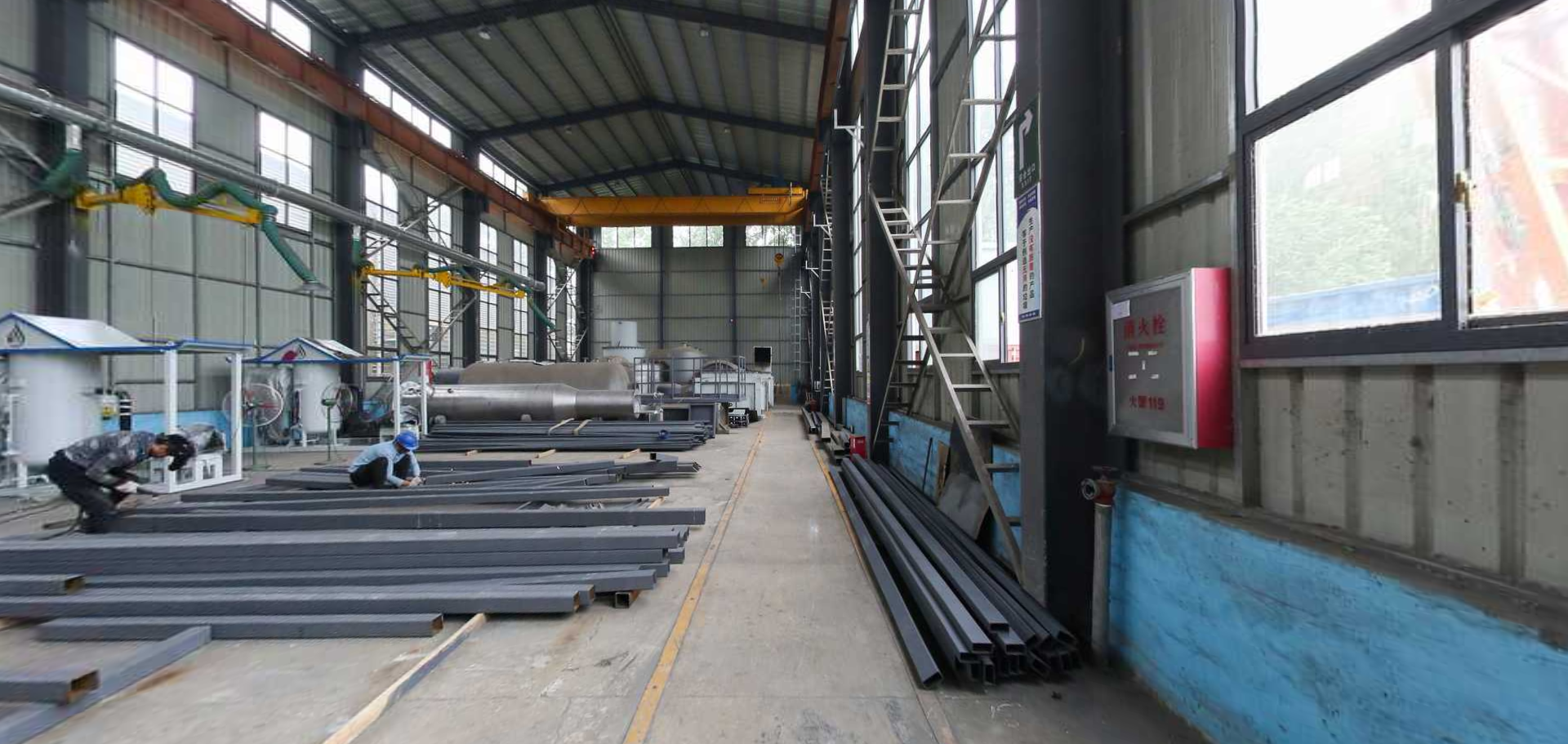
Get those four right and the remaining questions become commercial. Get them wrong and no amount of documentation will make a smoking tip compliant. Shandong Zexuan Environmental Protection Technology Co., Ltd. operates a 24,100 m² manufacturing base with more than 80 employees, including 30 or more engineering and technical specialists, and an annual manufacturing capacity of more than 60 sets of flare and thermal treatment systems, with international project experience in more than 10 countries across the Middle East, Central Asia, Southeast Asia and Africa. That capacity is most useful to a buyer when it is applied to a specification that already states its constraints.
Next step: quote, sample or documentation
Send the design basis — composition, flow range, smokeless position, duty mode and existing tip connection data — and Zexuan will respond with the matching ZX-FT category, alloy proposal and lead time. You can also request the product catalogue and company profile for the full flare and thermal treatment range.
Email: alice@zexuaneco.com | Tel / WhatsApp: +86 186 7883 1572
Website: www.zexuaneco.com
Download the company and product brochure: Shandong Zexuan PDF brochure
Have Questions or Need More Details?
Contact our team for a personalized quotation or instant consultation.
Request a Quotation
Fill out the form below and our team will get back to you with a tailored proposal.
WhatsApp Direct Chat
Prefer to chat in real-time? Message us on WhatsApp for instant assistance & quick answers.
- Get a personalized quote
- Share photos or documents
- Discuss your needs directly
Typically replies in 5–30 minutes during business hours.