Flare Systems Supplier Review: Build Scope, Material Proof, and Delivery Assurance
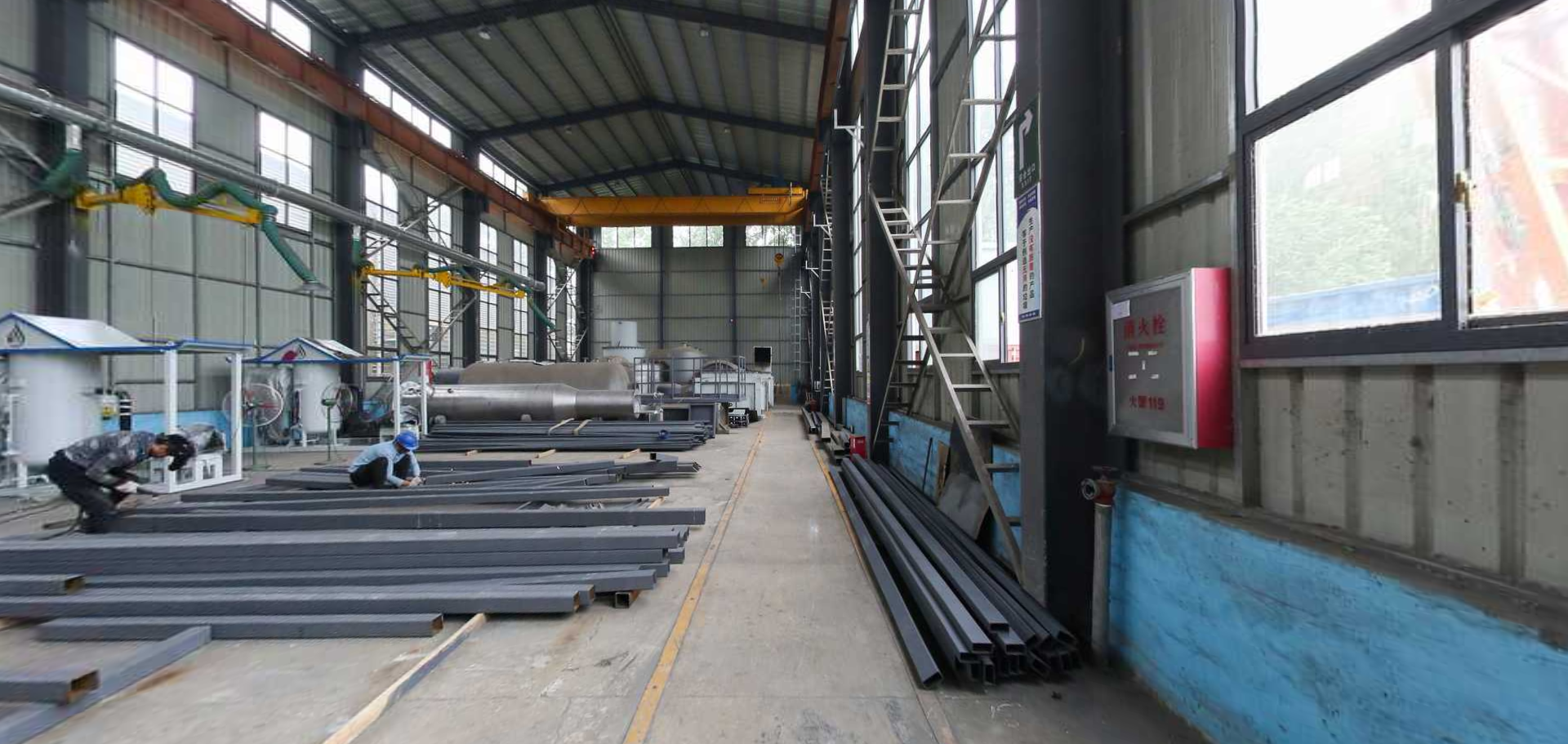
Build scope is decided on the shop floor and in the document set, not in a catalogue.
Flare systems are approved on documents, not on catalogue photographs. A supplier review that compares only product lists leaves three questions open: whether the elevated flare, enclosed ground flare, biogas flare, skid-mounted LNG/LPG unit, thermal oxidizer and hazardous waste incinerator in your quotation all sit inside the same supplier's build scope; which steel or nickel alloy is assigned to which component; and what protects the delivery date after the purchase order is signed.
This review is written for buyers working between evaluation and execution, where a technical enquiry has to become a verifiable scope. It sets out a document-based method in three parts — build scope by series and configuration, material proof by component, and delivery assurance built on skid-mounted design, inspection and acceptance testing — and uses Shandong Zexuan Environmental Protection Technology Co., Ltd. (Zexuan) as the worked example. Zexuan is a manufacturer and engineering service provider established in 2015 that supplies industrial flare systems and thermal treatment equipment from a 24,100 m² manufacturing base in Shandong, China.
The Review Problem: Three Documents That Rarely Match
Most flare procurement problems are not caused by a missing product. They are caused by three documents written at different levels of detail: the buyer's equipment list, the supplier's product overview, and the bill of materials issued for fabrication. The first names a duty, the second names a series, and the third names a material grade, a plate thickness and a valve brand. When those three do not line up, the gap is usually discovered during inspection or commissioning rather than during tender evaluation.
The correction is to review a supplier at the same granularity you intend to inspect it. That means treating each series as a scope statement with boundaries: what is designed, what is fabricated in-house, what is integrated onto a skid, what is bought in as a certified component, and what is erected on site. A supplier that answers those five questions in writing can be audited. A supplier that answers with a product photograph cannot.
Industry Background: Why Hardware Evidence Now Carries More Weight
The commercial context explains the shift. The World Bank's Global Gas Flaring Data reports global gas flaring volumes of 151 billion cubic meters in 2024, the highest level since 2007, which keeps scrutiny on combustion performance and on the equipment that delivers it.
Regulation has moved in the same direction. The U.S. EPA's NSPS OOOOb rule, cited as 40 CFR 60.5360b and effective from 7 May 2024, removes the option to assume a default destruction efficiency of 98% for flares; operators must demonstrate actual performance instead. That matters beyond one jurisdiction, because it changes what a buyer can accept as evidence of capability. A design statement is no longer enough on its own — the supplier has to be able to show which tip, which assist method, which control logic and which material grade sit behind the claimed performance.
Two reference points should be kept separate during review. EPA's 13.5 Industrial Flares document defines a flare as a thermal oxidation system using an open flame without enclosure, and states that properly operated flares achieve at least 98 percent destruction efficiency in the flare plume — a general technical statement, not a guarantee for any specific design or operating condition. Separately, ANSI/API Standard 521 is titled Pressure-relieving and Depressuring Systems and is identified in the API document as identical to ISO 23251. API 521 is a design reference for pressure relief and depressuring; citing it does not certify a product or a project. In the U.S. refinery context, EPA also discusses a minimum combustion-zone net heating value of 270 Btu/scf on a 15-minute block basis and continuous monitoring of assist air or assist steam flow for assisted flares. Each of those points becomes a question about hardware, and each answer traces back to a material, a component or a test record.
What “Build Scope” Should Include in a Flare Systems Quotation
Build scope is the list of equipment a supplier designs, fabricates and integrates itself, together with the interfaces it does not own. For flare and thermal treatment work, a usable scope statement normally has four layers: the combustion device (flare tip, burner, oxidizer or kiln), the structure or vessel that carries it, the control and ignition package, and the auxiliary systems such as gas treatment, heat recovery or flue gas handling.
Zexuan's published scope follows that logic. The company describes itself as operating as a manufacturer, under OEM, ODM and engineering solution models, with customization covering flare type, capacity, material, structure, control system, layout, voltage and documentation. That is a broad scope claim, and the review task is to test it series by series rather than accept it at company level.
Series-level scope statements are the correct unit of review
A company-level scope statement can be true while a specific quotation still falls outside it. Review each series separately, confirm the configuration inside that series, and then confirm which documents will prove it. The sections below apply that sequence to the product families named in Zexuan's portfolio.
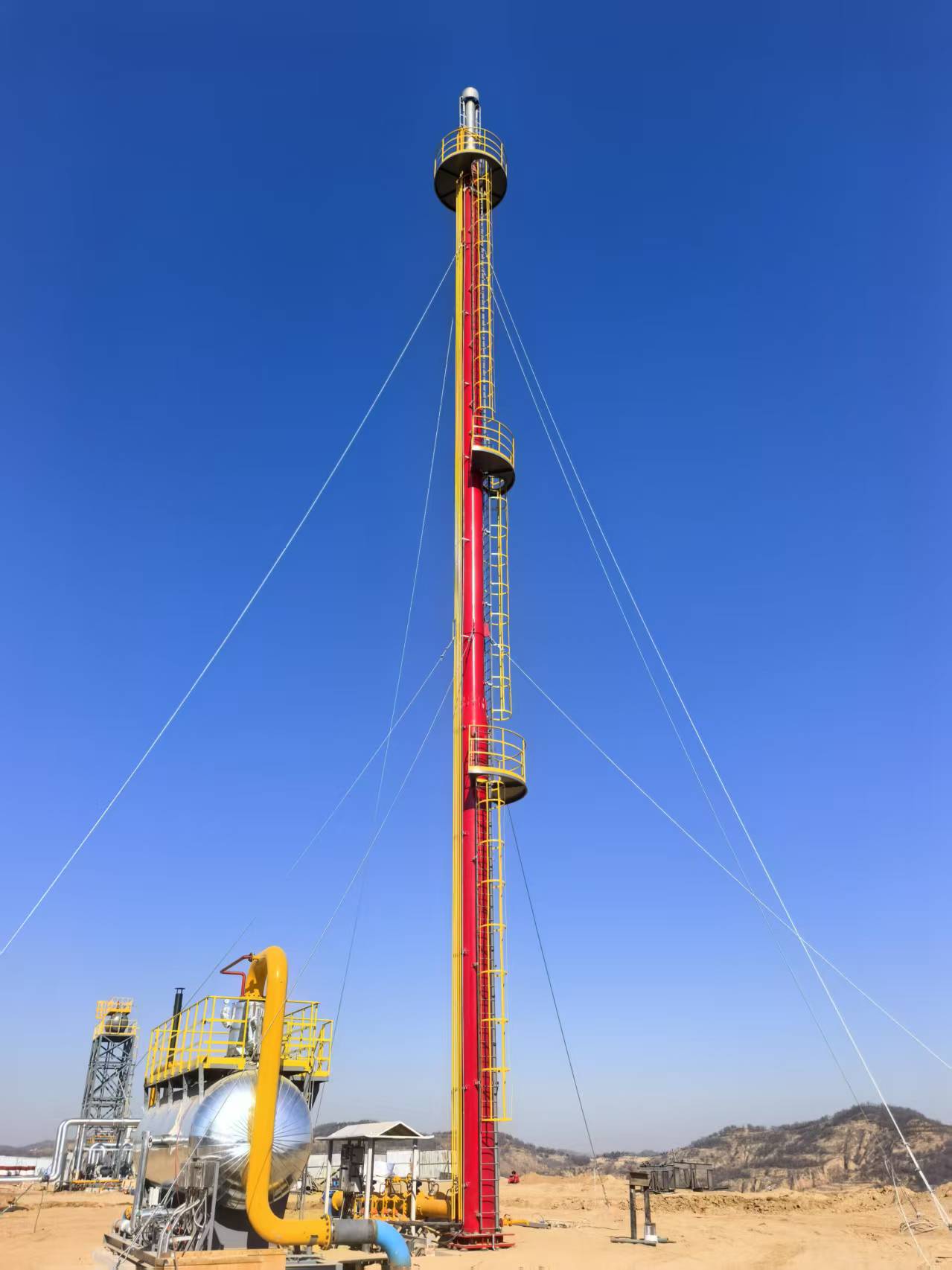
Elevated flare configurations differ in structural system, foundation interface and erection method — each needs its own scope line.
Elevated Flare Configurations: Self-Supported, Guyed-Wire, Derrick-Supported and Demountable
Elevated flares are where configuration language most often hides scope. Zexuan's published description places the elevated flare product in four categories: self-supported elevated flare, guyed-wire flare, derrick-supported flare and demountable flare, delivered as the ZX-SSEF, ZX-GWF and ZX-DSF series. Those four categories are not interchangeable options on one drawing. They change the structural system, the foundation loads, the erection sequence and, in the demountable case, the transport and reassembly plan.
A documented project example shows the level of detail a buyer should expect. Two guyed-wire elevated flare systems were installed in China for emergency venting and safe combustion of natural gas during gathering and transportation, with a 60 m elevated structure, a DN350 flare tip, and automatic ignition under PLC control; the reported result was stable operation under harsh climate conditions and improved operational safety.
The flare tip carried by that structure belongs to a separate series. The ZX-FT Series flare tip is described for smokeless, sonic, air-assisted and Coanda operation, with primary materials including Inconel 625, SS310S and SS316L, operating at temperatures up to 1100 °C, with customizable diameter and gas capacity for hydrocarbon gases in refinery, petrochemical, LNG and oil and gas processing industries. This separation is useful during review: the stack, the tip and the ignition package are three scope lines with three different evidence sets.
What to request for an elevated flare
- The structural category stated in writing (self-supported, guyed-wire, derrick-supported or demountable), including the design inputs used for wind and seismic loading.
- The tip model, tip material and expected operating temperature, matched to the gas composition in your duty.
- The ignition and control architecture, including whether PLC control and automatic ignition are inside the supply.
- For demountable units, the assembly procedure and the transport configuration, since these determine site duration.
Enclosed Ground Flares: Scope Evidence Beyond the Efficiency Number
Enclosed ground flare reviews tend to fixate on one figure. Zexuan's ZXE-EGF Series enclosed ground flare is described with a low-radiation design, refractory lining, and material options including carbon steel, SS304, SS316L and SS310S, operating at 800 °C–1200 °C with combustion efficiency up to 99.9%, intended for LNG terminals, chemical plants and petrochemical parks. The efficiency figure is a design and performance statement for the series; it does not tell you what refractory grade, what radiation calculation or what control philosophy will be supplied on your unit.
Two documented applications show how the scope questions differ. At an oilfield transfer station in China, one enclosed ground flare system treating natural gas vent gas was completed within one year, with an enclosed ground flare design, an explosion-proof control cabinet and an automatic ignition system; reported results were safe disposal of natural gas emissions, reduced noise and visual impact, and stable operation. In a coalbed methane application, a ground flare with 90×10⁴ Nm³/d capacity, a three-stage venting design and PLC automatic control has operated for more than two years with stable methane combustion.
Read together, the two cases define three verification tracks that a series datasheet cannot cover: the refractory and lining specification for the operating temperature range, the radiation and noise assessment for the site boundary, and the electrical documentation behind the explosion-proof control cabinet. Request all three before comparing prices, because they change both cost and schedule.
Biogas and Skid-Mounted LNG/LPG Systems: Where Delivery Assurance Is Decided
The ZXE-BGF series covers biogas flare duty in the supplier's published biogas and landfill gas applications, and the ZX-SMF Series is described as a skid-mounted LNG/LPG flare system for portable LNG emergency and boil-off gas duty. Both families put more of the build into the workshop and less onto the site, which is exactly why they need tighter boundary documents.
Skid-mounted ground flare projects illustrate the pattern. In Iraq, one skid-mounted ground flare system treating combustible pyrolysis gas from waste tyre recycling has operated for more than three years, with a skid-mounted modular design customized to pyrolysis gas characteristics and described as easy to install and operate; the reported outcome was control of uncontrolled gas emissions and safe combustion during plant operation. In Turkey, one skid-mounted ground flare system has run for more than two years on pyrolysis gas, with a compact modular structure and a customized flare solution supporting stable operation and improved process safety. A further skid-mounted system in Vietnam was described with a modular skid design, flexible installation and a design basis for variable gas conditions.
Compact skid design is a delivery claim, so test it as one
The delivery value of a compact skid is that assembly, wiring, piping and function testing happen before shipment, shortening site work and allowing the unit to be repositioned or redeployed. That value only materializes if the skid battery limit is defined. Ask for the interface list: what arrives fully assembled inside the skid, what is shipped loose, what is erected on site (foundations, structural steel, stack sections, interconnecting piping), and what lifting and transport envelope the skid requires. A skid that exceeds the receiving site's crane or road limits converts a fast installation into a slow one.
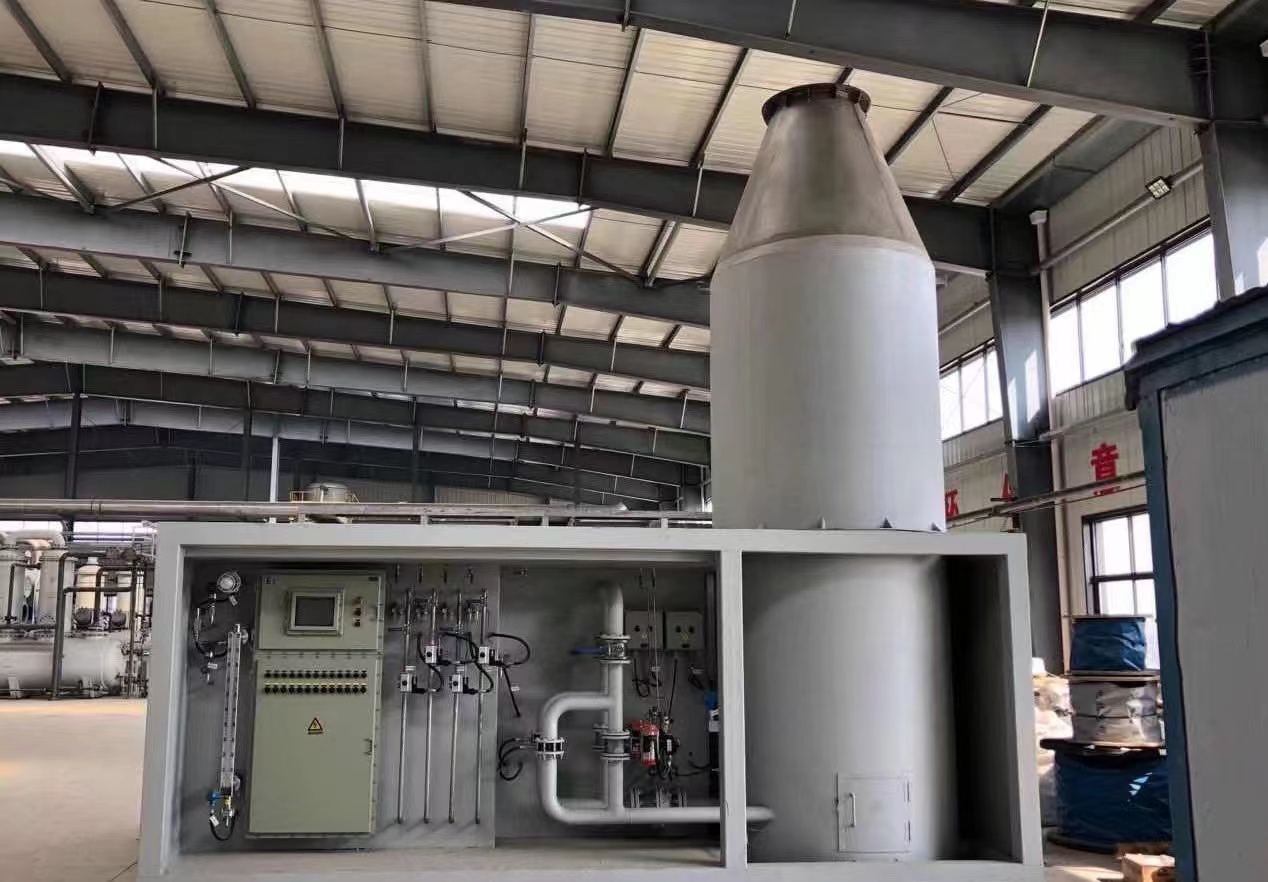
Skid-mounted ground flare systems move fabrication, wiring and function testing into the workshop before shipment.
Thermal Oxidizers and Hazardous Waste Incineration: Verifying the Treatment Boundary
Thermal treatment equipment is where the boundary between combustion and gas cleaning decides who is responsible for the emission result. Zexuan's ZX-TO, ZX-RTO and ZX-RCO series thermal oxidizers are described for VOC treatment, operating at 800 °C–1200 °C with destruction efficiency up to 99% or higher, in direct thermal oxidation, regenerative thermal oxidation and regenerative catalytic oxidation configurations, using carbon steel, SS304, SS316L and ceramic heat storage materials. Within that family, the RTO configuration is described as more suitable for chemical plants, pharmaceutical plants, waste gas treatment and VOC control projects.
The ZX-INC Series hazardous waste incineration system is classified as a rotary kiln incinerator for solid, liquid and hazardous waste, operating at 850 °C–1200 °C with multi-stage combustion, heat recovery and waste gas treatment integration, using carbon steel, SS310S, refractory materials and high-temperature alloys.
The incineration case that best shows the boundary problem is a flue gas treatment reference: a waste tyre recycling company in Korea received three sets of flue gas treatment equipment for exhaust gas from a pyrolysis process, described as a customized flue gas purification solution integrated into an environmental treatment system. Whether that scope is inside or outside the incinerator supply is precisely the question a buyer must settle before comparing offers — an oxidizer or kiln quoted without downstream treatment is not the same offer as one quoted with it.
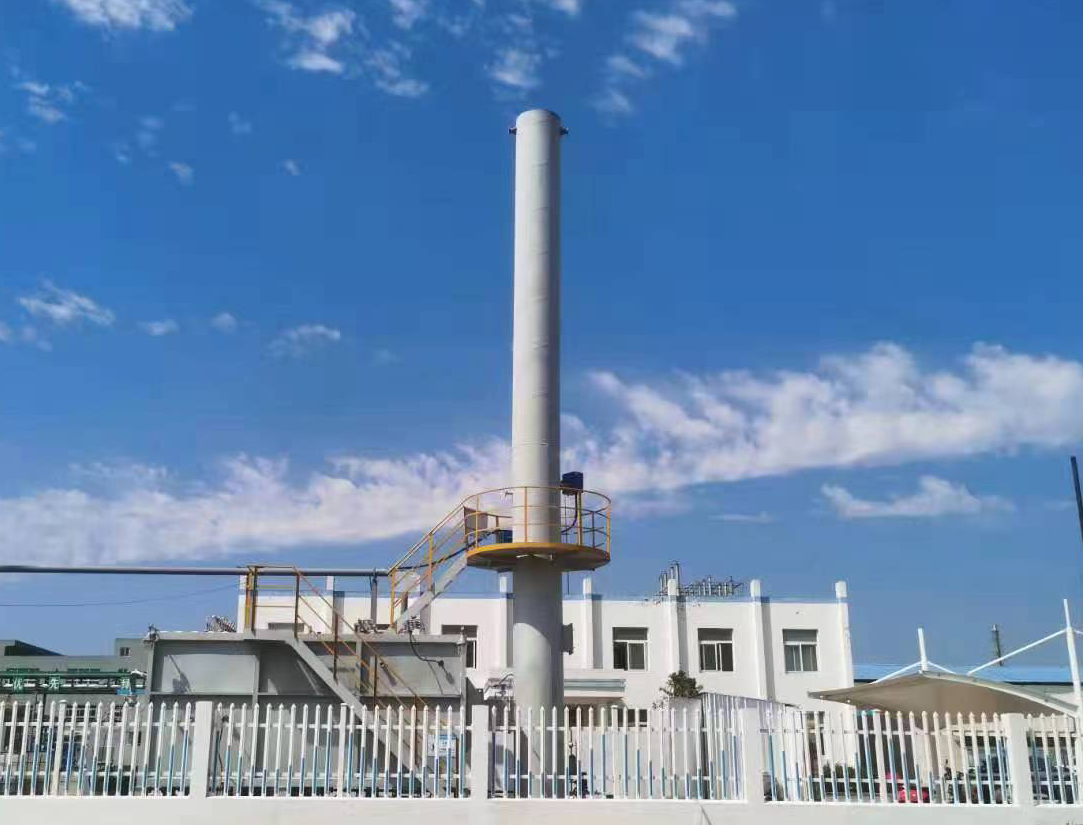
ZX-TO, ZX-RTO and ZX-RCO configurations share a family name but differ in heat recovery and catalyst scope.
Material Verification: Five Grades, Five Different Questions
The single most common review error is reading a series-level material list as a component-level material assignment. Zexuan's published data states material options per series, and those lists differ: carbon steel appears in the enclosed ground flare, thermal oxidizer and incineration series; SS304 and SS316L appear in the enclosed ground flare and thermal oxidizer series; SS310S appears in the enclosed ground flare, incineration and flare tip series; and Inconel 625 appears in the published material list for the ZX-FT flare tip, which is rated to 1100 °C.
That distribution is a starting point, not a bill of materials. A material option list tells you what the supplier can work with; it does not tell you which shell, duct, internals, hot-face component or fastener receives which grade on your unit. Inconel 625, for example, is published in the tip context rather than in the enclosed ground flare or oxidizer context — so a quotation that lists Inconel 625 without naming the component it applies to has not yet been verified.
| Material | Where it is documented in Zexuan's series data | Component-level question to ask | Evidence to request |
|---|---|---|---|
| Carbon steel | ZXE-EGF, ZX-TO/RTO/RCO, ZX-INC | Which shells, ducts, supports and structural parts are carbon steel, and to which grade? | Mill certificates with grade designation and plate thickness |
| SS304 | ZXE-EGF, ZX-TO/RTO/RCO | Which internals or low-corrosion zones are SS304 rather than a higher grade? | Material certificates plus the component list showing where SS304 is used |
| SS316L | ZXE-EGF, ZX-TO/RTO/RCO, ZX-FT | Which wetted or corrosive-service parts are specified as SS316L? | Certificates, positive material identification records, welding procedure specification |
| SS310S | ZXE-EGF, ZX-INC, ZX-FT | Which high-temperature zones use SS310S, and up to what temperature? | Certificates plus the design temperature basis for each zone |
| Inconel 625 | ZX-FT flare tip (rated up to 1100 °C) | Which tip components are Inconel 625 and which are SS310S or SS316L? | Tip bill of materials, alloy certificates, tip drawing with material callouts |
Material proof is also a process question. Zexuan's stated quality control sequence covers incoming material inspection, welding inspection, dimensional inspection, pressure and leak testing where applicable, functional testing, factory acceptance testing and final inspection before shipment, described as 100% inspection, with FAT and SAT as the acceptance route. That sequence is the mechanism by which a material list becomes a verifiable unit — but only if the inspection and test plan you approve names the material checks explicitly.
Delivery Assurance: Capacity, Lead Time, Testing and Skid Design
Delivery assurance is a set of commitments, and each one can be checked against a number. Zexuan's published capability data states a monthly capacity of 5 sets for customized industrial systems, an annual manufacturing capacity of 60+ sets of flare and thermal treatment systems, a minimum order quantity of 1 set, and a typical production lead time of 60–120 days depending on project requirements. Commercial terms are stated as EXW, FOB or CIF delivery, with T/T and L/C payment available and a typical structure of 30% advance payment and 70% before shipment, negotiable according to project requirements. After-sales scope is stated as remote support, commissioning assistance, spare parts and training.
Those numbers should be read against your project calendar rather than in isolation. A 60–120 day production window starts when the design is frozen, not when the enquiry is sent; the review therefore has to confirm when drawings are approved, when long-lead bought-in items are ordered, and which inspection hold points sit between fabrication and shipment. With a five-set monthly capacity for customized systems, schedule risk is less about total factory throughput than about slot allocation across concurrent projects.
Certification scope is narrower than a product claim
Zexuan holds three management system certificates issued by CSU International Certification Co., Ltd. on 18 March 2026 and valid to 17 March 2029: ISO 9001:2015 quality management, certificate 26326Q00079R001; ISO 14001:2015 environmental management, certificate 26326E00054R001; and ISO 45001:2018 occupational health and safety management, certificate 26326S00054R001. The certificates state validity for domestic Chinese bidding and procurement under the CNAS accreditation mark and mutual recognition among IAF member economies under the IAF multilateral recognition mark.
Read the scope wording carefully. The certified scope covers the development of waste gas treatment equipment and control units and the sales of waste gas and waste liquid treatment equipment, with the environmental and occupational health and safety certificates adding related management activities. These are management system certifications for an organisation and a defined scope — they are not type approval for a specific flare or oxidizer model, and they do not by themselves demonstrate API 521 compliance. Treat them as evidence of a controlled quality, environmental and safety system, and keep product-level verification in the technical documents.
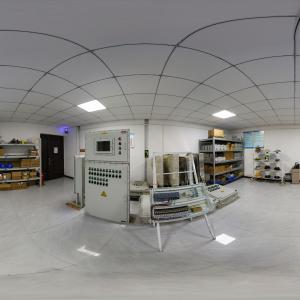
Inspection hold points between fabrication and shipment are where delivery assurance becomes measurable.
Step-by-Step Supplier Verification Protocol
The protocol below converts the review into a sequence you can run against Zexuan or any comparable manufacturer. Each step produces a document, and each document maps to a clause in the purchase order.
- Fix the equipment list at series and configuration level. Name the series (ZX-SSEF, ZX-GWF, ZX-DSF, ZXE-EGF, ZXE-BGF, ZX-SMF, ZX-TO/RTO/RCO, ZX-INC), the configuration inside it, and the duty. Reject quotations that answer at company level.
- Request the component-level bill of materials with material grades. Ask specifically which parts are carbon steel, SS304, SS316L, SS310S and Inconel 625, and require alloy certificates for each.
- Request configuration-specific technical documents. Structural design basis for elevated flares; refractory and radiation basis for enclosed ground flares; heat balance and catalyst scope for oxidizers; kiln and downstream treatment boundary for incinerators.
- Confirm the skid battery limit. Separate shop-assembled scope from site-erected scope, and check the lifting and transport envelope against the receiving site.
- Approve the inspection and test plan. Confirm incoming material inspection, welding inspection, dimensional inspection, pressure and leak testing where applicable, functional testing, FAT and final inspection before shipment, and agree the hold points you will witness.
- Lock the acceptance route. Confirm that Factory Acceptance Test and Site Acceptance Test are both written into the contract, with the criteria for each.
- Match commercial terms to the schedule. Confirm lead time from drawing approval, capacity slot, delivery term (EXW, FOB or CIF), payment structure and the documentation package that ships with the unit.
- Verify certification and after-sales scope. Check certificate numbers, issuing body, validity dates and scope wording, then confirm remote support, commissioning assistance, spare parts and training responsibilities.
Comparison Table: Series-Level Build Scope at a Glance
The table consolidates what Zexuan's published data states per series. Where a field is not itemised in the published description, it is marked as a document request rather than filled in — an absent statement is not evidence of capability, and it is not evidence of a gap either.
| Series | Documented build scope | Documented material options | Verification document to request |
|---|---|---|---|
| ZX-SSEF / ZX-GWF / ZX-DSF elevated flares | Self-supported, guyed-wire, derrick-supported and demountable flare categories | Not itemised in the published series description | Component bill of materials; structural design basis; erection and demounting procedure |
| ZXE-EGF enclosed ground flare | Low-radiation design with refractory lining; 800–1200 °C; combustion efficiency up to 99.9%; LNG terminals, chemical plants, petrochemical parks | Carbon steel, SS304, SS316L, SS310S | Refractory specification; radiation and noise assessment; control cabinet electrical documentation |
| ZXE-BGF biogas flare | Biogas and landfill gas flare duty in the supplier's published biogas applications | Not itemised in the published series description | Gas composition basis; ignition and control logic; material schedule for corrosive biogas service |
| ZX-SMF skid-mounted LNG/LPG flare | Skid-mounted LNG/LPG flare for portable LNG emergency and boil-off gas duty | Not itemised in the published series description | Skid battery limit drawing; interface list; transport and lifting envelope |
| ZX-TO / ZX-RTO / ZX-RCO | VOC treatment; 800–1200 °C; destruction efficiency up to 99% or higher; direct thermal, regenerative thermal and regenerative catalytic configurations | Carbon steel, SS304, SS316L, ceramic heat storage materials | Heat and mass balance; ceramic media specification; catalyst scope for RCO; outlet guarantee basis |
| ZX-INC hazardous waste incineration | Rotary kiln for solid, liquid and hazardous waste; 850–1200 °C; multi-stage combustion, heat recovery and waste gas treatment integration | Carbon steel, SS310S, refractory materials, high-temperature alloys | Kiln and downstream treatment boundary; refractory schedule; flue gas treatment scope |
| ZX-FT flare tip | Smokeless, sonic, air-assisted and Coanda operation; up to 1100 °C; customizable diameter and gas capacity | Inconel 625, SS310S, SS316L | Tip bill of materials; alloy certificates; tip drawing with material callouts |
Use Cases: Which Evidence Matters for Which Project
The same document set is not equally important across duties. Match the verification effort to the project type.
- Refinery and petrochemical relief duty. Priority evidence: structural category and design basis for elevated flares, tip material and operating temperature, and the control and ignition architecture. Where U.S. refinery rules apply, confirm how combustion-zone heating value and assist-flow monitoring requirements are addressed.
- LNG terminals and bunkering. Priority evidence: skid battery limit, boil-off gas duty basis, and the transport and lifting envelope — the delivery claim is the technical claim here.
- Biogas, landfill gas and pyrolysis gas. Priority evidence: gas composition basis, ignition and control logic for variable flow, and the material schedule for corrosive service, together with the documented skid-mounted references in Iraq, Turkey and Vietnam.
- Chemical and pharmaceutical VOC control. Priority evidence: oxidizer configuration (TO, RTO or RCO), ceramic media and catalyst scope, and the outlet performance basis rather than the headline destruction efficiency alone.
- Hazardous waste incineration. Priority evidence: kiln scope, high-temperature material and refractory schedule, and the boundary between incineration and flue gas treatment.
Frequently Asked Questions
What should a buyer verify before treating a supplier as an OEM flare systems manufacturer?
Verify three things in writing: that the supplier operates as a manufacturer under OEM, ODM and engineering solution models rather than acting as an intermediary; that customization is offered across flare type, capacity, material, structure, control system, layout, voltage and documentation; and that the specific series in your enquiry sits inside that scope. Zexuan states manufacturer, OEM, ODM and engineering solution production services, with a minimum order quantity of 1 set for customized industrial systems. Ask for the OEM/ODM responsibility matrix — design ownership, branding, documentation language and warranty holder — before treating the capability as confirmed.
Which flare and thermal treatment series can be reviewed as one build scope?
Zexuan's published portfolio covers elevated flares in self-supported, guyed-wire, derrick-supported and demountable categories (ZX-SSEF, ZX-GWF, ZX-DSF), the ZXE-EGF enclosed ground flare, the ZXE-BGF biogas flare series, the ZX-SMF skid-mounted LNG/LPG flare, the ZX-FT flare tip, the ZX-TO, ZX-RTO and ZX-RCO thermal oxidizers, and the ZX-INC hazardous waste incineration system. Reviewing them as one scope is useful for interface control, but each series must still be verified with its own technical documents, because material options and operating ranges differ between them.
How is material proof documented for carbon steel, SS304, SS316L, SS310S and Inconel 625?
Material proof has three layers: the series-level option list, the component-level bill of materials, and the traceability records. Zexuan's published data lists carbon steel, SS304, SS316L and SS310S for the ZXE-EGF enclosed ground flare; carbon steel, SS304, SS316L and ceramic heat storage materials for the thermal oxidizer series; carbon steel, SS310S, refractory materials and high-temperature alloys for the ZX-INC incinerator; and Inconel 625, SS310S and SS316L for the ZX-FT flare tip rated to 1100 °C. Ask for mill certificates, positive material identification where applicable, and a welding procedure specification that shows which grade is joined to which.
What are the stated MOQ, payment and delivery terms?
Zexuan states a minimum order quantity of 1 set, since flare and thermal treatment systems are customized to project requirements. Delivery terms are stated as EXW, FOB or CIF, with T/T and L/C payment available and a typical structure of 30% advance payment and 70% before shipment, negotiable according to project requirements. These are commercial starting points for negotiation, not fixed prices; confirm them against your Incoterms choice, currency, inspection rights and documentation package before signing.
Is a factory acceptance test the same as a site acceptance test?
No, and both should be contracted. The Factory Acceptance Test verifies the assembled system before shipment, while the Site Acceptance Test verifies it after installation and commissioning in its operating context. Zexuan's stated acceptance route includes both FAT and SAT, within a quality control sequence covering incoming material inspection, welding inspection, dimensional inspection, pressure and leak testing where applicable, functional testing, FAT and final inspection before shipment, described as 100% inspection. Agree the test criteria, witness points and document deliverables for each stage separately, because a passed FAT does not cover installation quality.
How long does delivery take, and what capacity stands behind it?
Zexuan states a typical production lead time of 60–120 days depending on project requirements, a monthly capacity of 5 sets for customized industrial systems, and an annual manufacturing capacity of 60+ sets of flare and thermal treatment systems, supported by a 24,100 m² manufacturing base with more than 80 employees, including 30+ engineers and technical specialists. Read the lead time from drawing approval rather than from enquiry date, and confirm which capacity slot is reserved for your order. After-sales scope is stated as remote support, commissioning assistance, spare parts and training.
Conclusion: Convert the Review into Contract Documents
A flare systems supplier review succeeds when it ends with documents rather than impressions. Three outcomes should exist at the end of the evaluation: a series-and-configuration scope that states what is fabricated, integrated and erected; a component-level material schedule backed by certificates for carbon steel, SS304, SS316L, SS310S and Inconel 625 as applicable; and a delivery package that ties lead time, skid battery limits, inspection hold points, FAT and SAT to specific contract clauses.
Zexuan's published data supports that review at series level across elevated, enclosed ground, biogas, skid-mounted, thermal oxidizer and incineration equipment, with stated capacity, lead time and acceptance figures that can be written into a purchase order. What the published data does not do is assign a material grade to a specific component or certify a specific model — those answers belong in your project documentation set, and requesting them is the point of the exercise.
Next Step
If you are preparing a scope review or an RFQ for elevated flares, enclosed ground flares, biogas flares, skid-mounted LNG/LPG systems, thermal oxidizers or hazardous waste incineration, you can request the Zexuan company and product brochure as a starting document set, then ask for the component bill of materials and inspection plan for your specific series and configuration.
Download the brochure: Shandong Zexuan — Company and Product Brochure (PDF)
Technical contact for scope clarification: Alice, alice@zexuaneco.com, +86 18678831572. Headquarters: No. 2000, Shunhua Road, Innovation Zone, Jinan, Shandong Province, China. Manufacturing base: Huji Industrial Park, Mudan District, Heze, Shandong Province, China.
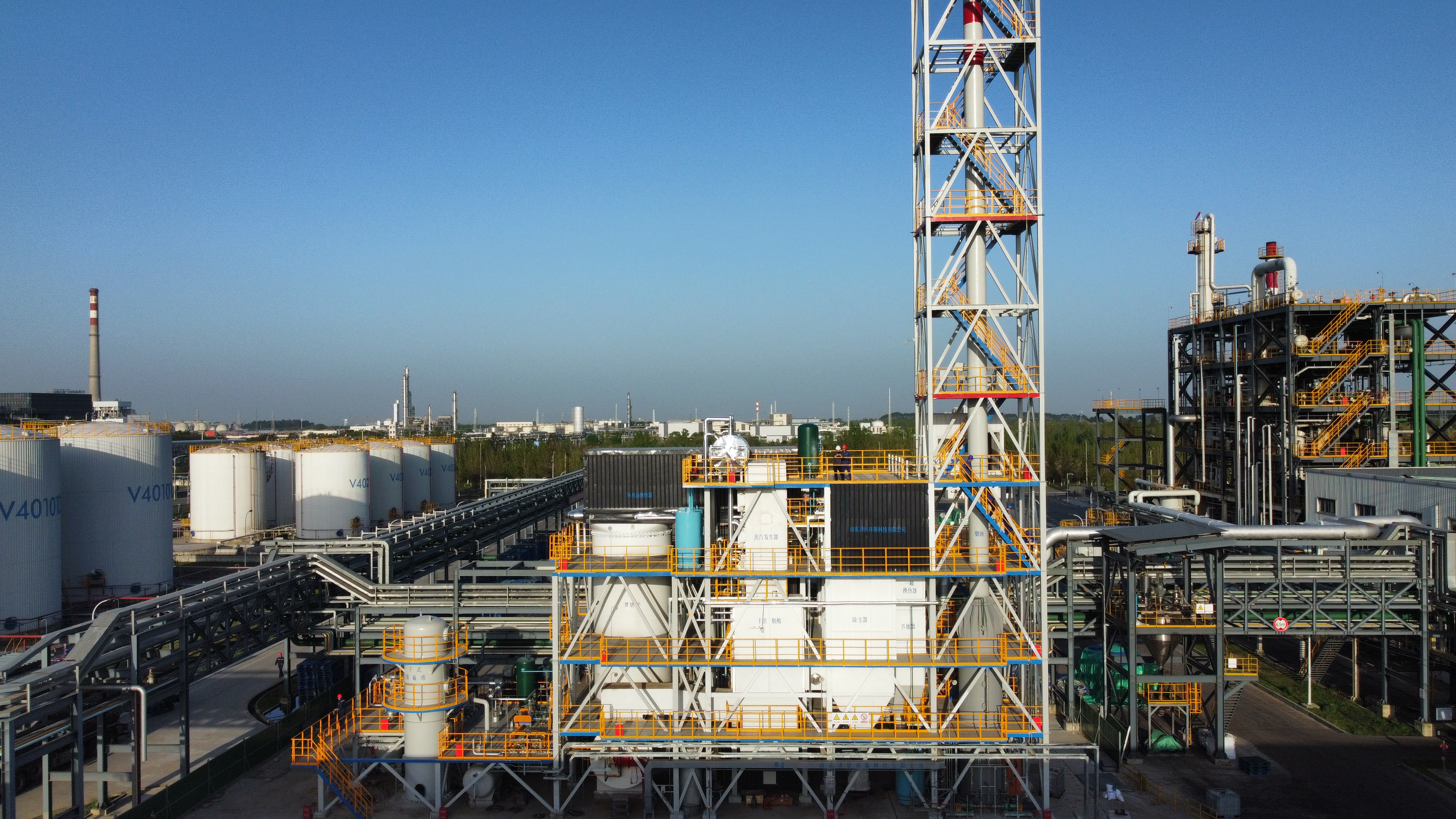
Incineration scope reviews should confirm the boundary between the kiln, heat recovery and waste gas treatment before quotation comparison.
Have Questions or Need More Details?
Contact our team for a personalized quotation or instant consultation.
Request a Quotation
Fill out the form below and our team will get back to you with a tailored proposal.
WhatsApp Direct Chat
Prefer to chat in real-time? Message us on WhatsApp for instant assistance & quick answers.
- Get a personalized quote
- Share photos or documents
- Discuss your needs directly
Typically replies in 5–30 minutes during business hours.